346: Teaching Kids Friendship Skills

with Jennifer Licate

Listen on Apple Podcasts  |  Spreaker  |  Spotify  |  iHeart Radio

Friendship shouldn’t feel like an audition.

And yet, for so many of our neurodivergent kids, it does.

They try to decode shifting rules, confusing social cues, and ever-changing group dynamics, all while wondering, “Am I weird?” or “Why don’t I fit in?” It’s heartbreaking to watch your child struggle socially, especially when you’re not sure how much to step in and how much to step back.

In this episode, I sit down with school counselor and children’s author Jennifer Licate to talk about what friendship skill-building actually looks like — especially for kids who struggle to read nonverbal cues, interpret tone, or navigate subtle social shifts.

We talk about:

    • Helping kids understand facial expressions and body language in concrete ways
    • Supporting authenticity without pushing masking or compliance
    • Knowing when to intervene and when to let kids work it out
    • Teaching empathy without teaching kids to tolerate mistreatment
    • Letting go of friendships that no longer feel safe or aligned

Friendship is nuanced. It’s emotional. And for our kids, it can feel overwhelming.

This conversation is full of gentle guidance for helping your child build real connection while staying true to who they are.

If you’ve ever wondered how to support your child socially without over-managing or forcing them to “fit in,” this episode is for you.

Listen now and let’s unpack this together.

Friendship can be one of the most joyful parts of childhood, and one of the most painful.

For many neurodivergent kids, social dynamics don’t come naturally. The subtle rules, shifting group norms, teasing versus meanness, and nonverbal cues can feel like a foreign language. Parents often watch from the sidelines, unsure how much to step in or step back.

Jennifer Licate, a school counselor with 14 years of experience and author of the Navigating Friendships children’s book series, sees these struggles up close every day in schools.

“One of the biggest things parents don’t always realize,” Licate explains, “is that kids experience so many little social moments throughout the school day — recess disagreements, being left out of a game, shifting roles in friend groups — and by the time they get home, it’s either minimized or it’s escalated.”

That gap between what happens in real time and what parents hear about later can make it hard to know what support is truly needed.


The Nonverbal Puzzle

Many neurodivergent kids struggle to read body language, tone, and facial expressions — all critical pieces of social communication.

“If you just tell a child to pay attention to body language, that’s too abstract,” Licate says. “You have to make it concrete. Show them real photos. Talk through what that expression might mean. And also teach them that one expression could mean different things, like frustrated, tired, overwhelmed.”

She encourages parents to empower kids to clarify in the moment when possible. “It’s okay to say, ‘You seem annoyed — did I upset you?’ That prevents small misunderstandings from growing into bigger conflicts.”

Intentional teaching matters. Social awareness isn’t always intuitive, it can be learned.


Empathy Over Compliance

One of the most powerful distinctions Licate makes is between teaching social skills and teaching compliance.

“If you only teach kindness without empathy,” she explains, “kids might accept unkind treatment in the name of being nice.”

Empathy works both ways. It helps children recognize when they may be monopolizing a conversation, and also when someone else is crossing a line.

“Each child has a different personality,” Licate says. “Some will make a joke. Some will call it out. Some will just remove themselves. What matters is helping them feel permission to stand up for themselves when something feels disrespectful.”


The Masking Dilemma

As children grow, social expectations become more nuanced. Some kids begin to question whether they should change to fit in.

In her book Am I Weird?, Licate tells the story of a girl who outgrows her friend group and wonders if she should alter herself to stay included.

“No one is going to click with every single person,” she says. “It’s not human nature. That doesn’t mean you don’t have value. You just have to find your people.”

For neurodivergent kids who may already feel different, this message is powerful. Adjusting behaviors to be respectful and reciprocal is part of social learning. But changing who you are to earn belonging can come at an emotional cost.

“It’s a dance,” Licate says. “Parents have to figure out when their child might need support in adjusting behavior, like taking turns in conversation, and when they need support finding peers who share their interests.”


When Should Parents Step In?

Few parenting dilemmas feel as tricky as knowing when to intervene socially.

“It really is a dance,” Licate acknowledges. “Observe first. Don’t jump in at the first sign of discomfort. Gather data.”

Instead of assuming what happened, she suggests asking specific questions after the interaction.

“I heard them laugh when they said that. How did that feel to you?”

Children often interpret situations differently than adults expect.

“It’s important to remember that all kids are learning,” Licate says. “Just because you see one unkind moment doesn’t mean that child is unkind. Give everyone grace.”


Partnership Matters

Finally, Licate encourages parents to partner with schools.

“School counselors and teachers see group dynamics all day long. They can offer valuable insight,” she explains.

Friendship is layered and developmental. It evolves. It includes joy and loss, connection and confusion.

But with intentional teaching, empathy, and room for authenticity, neurodivergent kids can build meaningful, reciprocal friendships, without sacrificing who they are.

And perhaps most importantly, they can learn that not fitting in everywhere doesn’t mean they don’t belong somewhere.

3 Key Takeaways
01

Friendship isn’t instinctive for many neurodivergent kids — it’s learned. Teaching social skills requires clarity, modeling, and real-world examples, especially around reading nonverbal cues and interpreting social nuance.

02

Authenticity matters. Helping kids adjust behavior when needed is different from teaching them to mask or comply. Empathy allows them to care about others without abandoning themselves.

03

Parents play a supporting role, not a controlling one. Observing, debriefing, and partnering with schools can create a balanced approach that builds confidence instead of dependence.

What You'll Learn

How to teach your child to recognize and interpret nonverbal social cues in concrete ways

How to support authenticity without encouraging masking

How to decide when to step in and when to let your child work through social conflict

How to help your child let go of friendships that no longer feel healthy

How to build empathy in ways that protect both connection and self-respect

MY GUEST

Jennifer Licate

Jennifer Licate's award-winning books focus on growing-up topics children struggle with, from friendship struggles to anxiety to study skills. The books are geared toward children ages 9 through 14. Young readers learn strategies to work through their challenge and give them the comfort of knowing they're not alone in their struggle.

She received her Master's Degree in Elementary and Secondary School Counseling and has worked as a school counselor for over a decade. Through working with children of all ages, she has seen the benefits of social emotional learning books firsthand. Children lose themselves as they're immersed within the stories. They're able to understand complex issues from so many different perspectives by seeing the story through the eyes of the characters.

Resources

Some of the resources may be affiliate links, meaning I receive a commission (at no cost to you) if you use that link to make a purchase.

Jennifer Licate’s books about friendships and anxiety: https://amzn.to/463cNcX

Subscribe to Clarity — my weekly newsletter on what’s working in business right now, delivered free, straight to your inbox.

Work with me to level up your parenting — online parent training and coaching  for neurodiverse families.

Our Sponsor

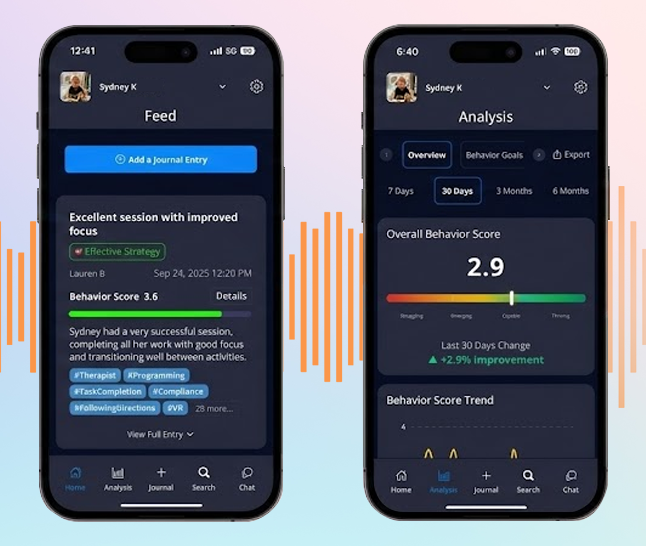
Village Metrics

Voice Journaling + AI for Parents of Neurodiverse Kids

Just talk about your child's day. VillageMetrics uses AI to find patterns, track progress, and show you what's helping. Start your free trial today.

Transcript

Beautifully Complex Podcast
346 Teaching Kids Friendship Skills, with Jennifer Licate

Jennifer Licate [00:00:01]: It’s that struggle of being okay with letting some friendships go and being okay with not fitting in with every single person. No one is going to click with every single person. It’s just not human nature. So knowing that doesn’t mean you don’t have value. You just have to find your people. It’s okay to respect other kids, but maybe not want to spend time with them outside of school.

Penny Williams [00:00:29]: Welcome to Beautifully Complex, where we unpack what it really means to parent neurodivergent kids with dignity and clarity. I’m Penny Williams, and I know firsthand how tough and transformative this journey can be. Let’s dive in and discover how to raise regulated, resilient, beautifully complex kids together.
If you want more support, join our free community at hub.beautifullycomplex.life.
Hello, parents. Welcome back to Beautifully Complex. I’m here with Jennifer Licate, who is a school counselor and children’s book author. We’re talking about teaching friendship skills to our neurodivergent kids — what that looks like, what tools and strategies we can use, and how much we step in versus letting our kids figure it out.
Jennifer, will you start by sharing a little about who you are and what you do?

Jennifer Licate [00:01:38]: Yes, thank you for having me. I’ve been a school counselor for 14 years and currently work as a career counselor. My experience in schools led me to create two book series. One is called Navigating Friendships, which includes eight books. The other is Nurturing Independence, with one title so far and another coming soon.

Penny Williams [00:02:17]: There are so many different topics you’re addressing in these books, and I think they’re useful because kids don’t always want to hear us lecture them.

Jennifer Licate [00:02:32]: Exactly. Books let kids learn through characters without feeling vulnerable. They can talk about what the character did and apply it to their own lives. It builds empathy and compassion in a safe way.

Penny Williams [00:03:35]: What kinds of things do kids tell you about friendship that parents might not realize?

Jennifer Licate [00:03:48]: In schools, I see interactions in real time. Kids come to me about small recess disagreements, being told they can’t play one day when they could the day before, or always being assigned the “bad role” in a game.
By the time kids get home, it might feel like a lifetime ago. Parents often don’t get the full picture until something escalates. Teachers and counselors can often see patterns building over time that parents may not know about.

Penny Williams [00:05:16]: What friendship challenges are you seeing most often?

Jennifer Licate [00:05:22]: It’s often about not being sure how to read other kids’ reactions. Kids struggle with feeling left out, wondering when to stand up for themselves, and deciding whether to keep trying in a group or find other friends.
There are power dynamics in play, and kids don’t always know when something crosses the line versus when it’s just normal group dynamics.

Penny Williams [00:07:06]: Many neurodivergent kids struggle with reading nonverbal cues. How can we help them build that skill?

Jennifer Licate [00:07:44]: It has to be very concrete. Telling a child to “watch body language” isn’t enough. I like to use real photographs of facial expressions. Talk through what frustrated looks like, what annoyed looks like.
And also explain that one expression could mean multiple things — tired, overwhelmed, frustrated. If something feels unclear, it’s okay to say, “Did that upset you?” We want to help kids address misunderstandings early.

Penny Williams [00:09:42]: Being intentional seems key. Teaching right after the social interaction helps.

Jennifer Licate [00:10:25]: Yes. When kids are feeling the emotion, it sticks more.

Penny Williams [00:10:42]: Can parents involve school counselors for support?

Jennifer Licate [00:10:48]: Absolutely. If you’re unsure whether it’s anxiety, academics, or social struggles, a school counselor can help figure that out. Teachers see interactions all day long and can provide context. It’s helpful to partner together.
Books can also help bridge conversations at home. Sometimes kids can see themselves more clearly through a character.

Penny Williams [00:13:54]: Let’s talk about your book Am I Weird? because many neurodivergent kids get labeled that way.

Jennifer Licate [00:14:18]: In the book, Eva realizes she doesn’t have much in common with her longtime friend group anymore. She wonders if she should change to fit in or stay true to herself.
The message is that you don’t need to click with everyone. Not fitting in doesn’t mean you lack value. You have to find your people.

Penny Williams [00:16:42]: Masking is a big topic in our community. How do we help kids stay authentic while still building friendships?

Jennifer Licate [00:16:56]: It’s a dance. If a child is over-talking about their interests and not giving others space, that’s something to gently teach. Role play. Help them feel what it’s like not to be heard.
But if a group isn’t respecting your child, help them find activities aligned with their interests. Robotics, step, art — shared interests are great foundations for friendship.

Penny Williams [00:19:59]: How do we teach social skills without teaching compliance?

Jennifer Licate [00:20:05]: Empathy is key. Empathy helps kids recognize when they’ve crossed a line and when someone else has. If we only teach kindness, kids might tolerate unkind treatment.
Each child handles conflict differently. Some joke, some speak up, some walk away. They need permission to stand up for themselves.

Penny Williams [00:22:52]: How much should we step in versus letting them figure it out?

Jennifer Licate [00:23:02]: It’s a dance. Observe first. Step in if something harmful is happening. But often, ask afterward.
I call them “data points.” “I heard Bobby say that — how did that feel?”
Your child might say it didn’t bother them. Or they might say it did. That guides you.

Penny Williams [00:25:18]: Are there common mistakes parents make?

Jennifer Licate [00:25:22]: One is assuming one unkind moment defines a child. All kids are learning. Give everyone grace — just as you’d want others to give your child grace.

Penny Williams [00:26:44]: Where can everyone find your books?

Jennifer Licate [00:26:53]: At storiesbyjennifer.com and on Instagram and Facebook under Stories by Jennifer Licate. My email is on my website as well.

Penny Williams [00:27:41]: I’ll link everything in the show notes. Thank you so much for being here.

Jennifer Licate [00:28:54]: Thank you for having me.

Penny Williams [00:28:55]: I see you. You’re doing hard and meaningful work, and you don’t have to do it alone. If you found this episode helpful, share it with someone who needs it and leave a quick review so others can find this support too.
When you’re ready for next steps, the Regulated Kids Project is here with tools, coaching, and community to help you raise a more regulated, resilient child.
Take good care.

hey there!

I'm your host, Penny Williams.

I help stuck and struggling parents (educators, too) make the pivots necessary to unlock success and joy for neurodivergent kids and teens, themselves, and their families. I'm honored to be part of your journey!

Hello!
I'm Penny Williams.

Host of Beautifully Complex. I help stuck and struggling parents (educators, too) make the pivots necessary to unlock success and joy for neurodivergent kids and teens, themselves, and their families. I'm honored to be part of your journey!

Free Community Hub

You don't have to do this alone! Find calm, confidence, and connection inside the FREE Beautifully Complex Parenting Hub.

Decode Your
Kid's Behavior
IN < 3 MINUTES

Take my FREE Animal Instincts Quiz to understand your child's biological stress response and get focused on what will help you and your kid RIGHT NOW.

FREE VIDEO SERIES
Quick Start: 3 High-Impact Actions to Transform Behavior

Transforming negative or unwanted behavior is a long and complex process. HOWEVER, there are a few actions you can take right now that will provide a big impact. These 3 high-impact strategies address foundational aspects of behavior, empowering you to help your child feel better so they can do better.

A Few of My Favorite Tools

Time Timer

Makes time visual.

Mighty + Bright

Manage chores and routines while building self-confidence and independence.

Mightier

Blends gaming with off-screen activities to teach coping skills through play.

Howda Hug Chair

A chair that gives kids a sensory hug.

Binge the Latest Episodes
353-Podcast Main Post Image
353: Selective Eating & How to Help Fill Nutritional Gaps
Selective eating in ADHD and autism isn’t defiance. Learn how sensory needs, anxiety, and pressure impact eating—and what actually helps your child thrive.
352 Podcast Main Post Image
352: Navigating Childhood & Adolescent Anxiety
Childhood anxiety makes more sense when you look beyond symptoms to environment, connection, and the hidden stressors shaping your child’s experience.
351 Podcast Main Post Image
351: ADHD in Kids: Why Understanding Their Brain Changes Everything
ADHD diagnosis and masking shape identity, safety, and self-understanding. Learn why honest conversations about neurodivergence change long-term outcomes.
350 Podcast Main Post Image
350: Alternative School Options
When your child is surviving school instead of succeeding, this episode offers real alternatives, practical advocacy tips, and hope for finding a better fit.
Share your thoughts

Leave a Reply

Start Typing

Get the Support You Deserve

Raising a neurodivergent child is complex — but you don’t have to do it alone.
Join the free Beautifully Complex Community Hub and get access to expert guidance, real-talk parenting tools, and a village that actually gets it.

Let’s help your child thrive, without losing yourself in the process.