372: The Neurodivergent Learner
with Emily King, Ph.D.
Listen on Apple Podcasts | Spreaker | Spotify | iHeart Radio
Academic learning is the cherry on top. Everything else has to be in place first before a child can even access the parts of their brain that do the reading, writing, and math — rested, safe, connected, not hungry, not overwhelmed. That’s the reframe returning guest Dr. Emily King brought to our conversation this week, and it’s one I wish every parent and teacher heard before the school year started.
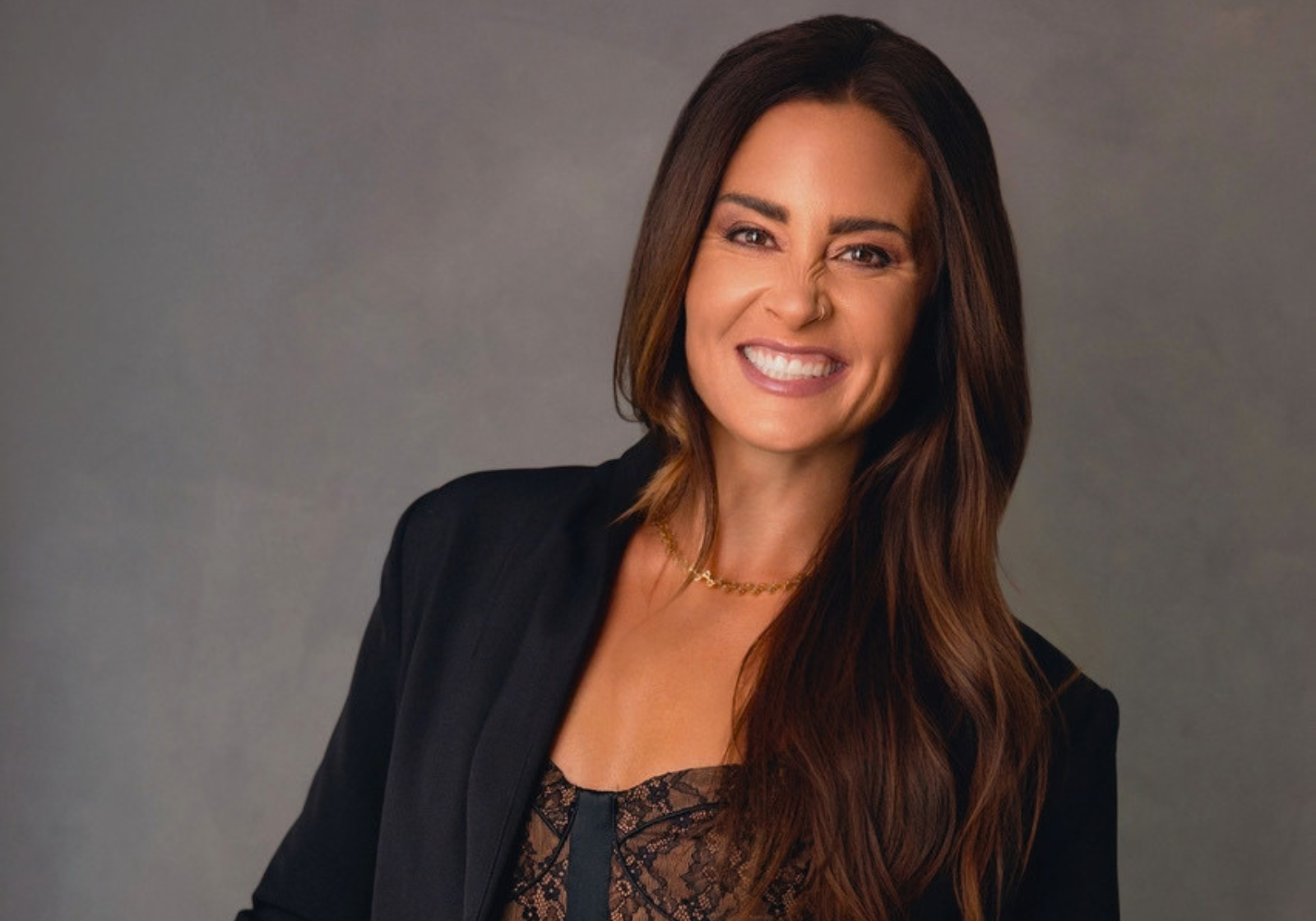
Dr. Emily King is a licensed psychologist and former school psychologist who now spends most of her time working with the parents and teachers around neurodivergent kids. Her new book, “The Neurodivergent Learner,” walks parents and teachers through everything that has to align before academics can even happen.
We talk about why the traditional special education model, built on the same diagnose it, treat it, fix it logic as the medical system, doesn’t actually fit complex neurodevelopment. Growth happens in waves, not straight lines, and regression doesn’t mean something is broken.
We dig into pacing, how some kids need things slowed down while gifted, ADHD, or twice exceptional kids need things sped up or they’ll disengage. We talk about the emotional side of ADHD, why kids would rather quit than try and fail in front of their peers, and why the fine at school, falling apart at home pattern isn’t a parenting problem, it’s a capacity problem.
We also talk about what it looks like when parents and teachers stop defending their own settings and start getting curious together about why a skill shows up in one place and not another.
If you’ve ever wondered why your kid can do something at school but not at home, or the other way around, this conversation will change how you think about it. Listen now.
For most parents of neurodivergent children, the school day is a study in contrasts: a child who holds it together for six hours in a classroom, then dissolves into tears, or worse, within minutes of walking through the front door. Teachers report a calm, capable student. Parents describe a meltdown factory. Both are telling the truth.
Dr. Emily King, a licensed psychologist and former school psychologist, says the gap comes down to one word: capacity. Kids who mask, self-manage, or simply muscle through a demanding day are drawing on a finite reserve of emotional and cognitive energy, and by 4:30 in the afternoon, that reserve is often gone.
King ties this to how skills become automated. Getting dressed, for most kids, requires no thought — they can do it even sick or exhausted. For a child whose nervous system hasn’t fully mastered a skill, that same task still demands active effort, which means it disappears the moment the child is depleted. Homework works the same way. A child might sail through math problems at 9 a.m., rested and supported, and be genuinely unable to do the same work at 4 p.m.
That reframes a familiar and painful narrative: the idea that a child who’s fine at school must be dealing with a parenting problem at home. King pushes back on that framing directly. Differences between settings usually point to differences in time of day, structure, or the sheer energy a setting demands, not to who is doing something wrong. Her advice for both parents and teachers is to trade judgment for curiosity: instead of asking what the other adult is doing differently, ask what’s different about the environment itself.
That same shift away from blame shapes how King thinks about learning differences more broadly. Special education, she argues, was built the same way the medical system was: diagnose the problem, apply the intervention, expect a fix. That model works reasonably well for an isolated skill deficit. It works far less well for complex neurodevelopment, which tends to move in waves. A child who regresses after a move, a lost pet, or a divorce isn’t failing to progress, their energy is going toward tolerating change, the same way anyone’s would.
Pacing matters just as much as patience, King says. Slowing down helps kids who process more slowly, but plenty of neurodivergent kids, including those who are gifted, have ADHD, or are twice exceptional, need the opposite: material that moves fast enough to hold their attention, or they disengage and behavior problems follow.
None of it points to a single fix, because there isn’t one. It points to something more useful: a framework for staying curious about what a child’s behavior, in this moment, in this setting, might actually be communicating.
Academic learning is the cherry on top. Before a child can access reading, writing, or math, they need to feel rested, safe, and connected, and no strategy will work until those pieces are in place.
When your child seems fine at school but falls apart at home, that’s not a parenting failure, it’s a sign they spent their whole capacity holding it together somewhere else.
Growth in neurodivergent kids doesn’t move in a straight line. Backslide after a hard season doesn’t mean something is broken; it usually means their energy is going toward tolerating change.
Why academic learning has to wait until your child feels rested, safe, and connected, and what that actually looks like day to day
How to recognize when your child is running on empty capacity instead of being defiant, and why school and home can look completely different
The difference between an automated skill and an emerging one, and why that distinction explains so much of what falls apart at 4pm
Why some kids need things slowed down while others, especially gifted, ADHD, or twice exceptional kids, need things sped up to stay engaged
How to talk with your child’s teacher without defensiveness, so you can figure out together why something works in one setting and not the other
Emily King, Ph.D.
Dr. Emily hosts the Learn with Dr. Emily Substack where you can find her blogs and parent workshops. She is also the creator of The Neurodiverse Classroom®, a professional development curriculum for educators. Dr. Emily has been featured on MSNBC’s Morning Joe and quoted in The New York Times.
Some of the resources may be affiliate links, meaning I receive a commission (at no cost to you) if you use that link to make a purchase.
Subscribe to Clarity — my weekly newsletter on what’s working in business right now, delivered free, straight to your inbox.

Lovebug Probiotics
Lovebug Probiotics makes it simple to support your family’s everyday wellness with thoughtfully formulated probiotics for different ages and stages of your family’s life.
Use code NOURISHED20 for 20% OFF your order.
372 The Neurodivergent Learner, with Emily King, Ph.D.
Penny Williams: [00:00:00] Welcome back everyone to Beautifully Complex. I have a returning guest with me, and I'm so excited about that. Dr. Emily King is here to talk about neurodivergent learners. What do we need to know? How do we help them, right? All the things. Let everybody know who you are and what you do, and then we'll jump in.
Emily King, Ph.D.: Thanks so much for having me again. I'm starting to lose count how many times we've
Penny Williams: No idea.
Emily King, Ph.D.: chatted on a podcast. I am Dr. Emily King, and I am a licensed psychologist in North Carolina, but originally trained as a school psychologist, and I work with preschool through young adult age kids. But mainly these days, I'm working with their parents and teachers.
My practice has just evolved over time, from schoolwork, to private practice therapy work, to working with the parents and teachers around the child and helping the [00:01:00] systems and the relationships around our kids. And then, of course, I am a parent to two very different neurodivergent boys. Not different — well, maybe you could say different from the world, but just different from each other.
Like, you know, when you have more than one child, you're like, "How in the world did these two people share DNA?" But they do. So I wrote this book to be a resource for parents and teachers. The audience is parents, but I'm already starting to hear back from teachers that it's been really helpful for them as well.
I had to break it down into different ages because I couldn't fit it all in, so this particular book does focus on pre-K through kind of early middle school years. Fingers crossed, my hope is that there is a sequel for teens and young adults. But yeah, I just wanted to put all the things I've learned that kids and families and teachers have taught me [00:02:00] in one place, so that parents and teachers could help these kids learn in any setting, not just school.
Penny Williams: Yeah, yeah. It struck me when you talked about working more now with parents and teachers, like the adults in the lives of our neurodivergent kids, because really it's a lot about the adults and the environments that we create, right? It's not about changing kids.
Emily King, Ph.D.: Yes, and I can't tell you how many times this crossed my mind before I ever shifted my practice. I mean, I still do see some teens who I started seeing as young children that I've just continued clinical work with. But the majority of my work is around the adults, because years ago, working in play therapy or cognitive behavioral therapy with kids, the things that stress them out are not necessarily anything that they're doing wrong or that they...
I mean, sometimes it's something [00:03:00] they have insight into and that they're working on. But many times, with autism or the impulsivity and short attention spans that come with ADHD, all these kids are doing the best that they can, and our systems are not aligning — not only with how they learn, but with the environment, the size of the school, the size of the classroom, the training of the teacher, which is why I do all my professional development training with teachers. Our general education teachers might get one class to talk about abnormal psychology or special education or behavior management, whatever it's called.
But there's so much science — nervous system science, memory and learning science — behind how, not only how we all learn, but how specifically neurodivergent kids learn [00:04:00] that has to be understood, especially in the general education classroom, where a majority of the students with average to above average intelligence are most of their day, as they should be.
They should be on the general curriculum. But there's so many problems that can come up, from sensory issues in a big classroom, or friendships in a big group, or — name it. I see it in my practice, but so many times I thought, "I've gotta go upstream. I've gotta go upstream to the parents and the teachers who could be more educated about this, have more strategies, prevent some of the stress that's coming into my play therapy room or my therapy room."
And also, many times I will work with kids, and any therapist or teacher listening probably knows what I mean — they can tell you all the things. They can tell you all [00:05:00] the strategies. You can teach them all the emotions. They can know all the stuff, and then they struggle to apply it. So there came a point in my clinical work where I felt it is so much more effective for me to empower the parents and educators who are in the day-to-day with our kids, rather than relying on our kids to generalize information when that's not a strong skill set for them, or remember information a day later, or have the impulse control to think, "Oh, I went over this with Dr. Emily the other day, I should apply this skill now." By then, that ship has already sailed.
Penny Williams: Yep.
Emily King, Ph.D.: So that's my thought process, and how I've evolved over the years in clinical work. But it absolutely, over the last five to 10 years, has shifted my focus as well to the adults, the adults in the [00:06:00] room.
Penny Williams: Yeah. And what you're kind of describing is the difference between expecting kids to fit —
Emily King, Ph.D.: Mm-hmm.
Penny Williams: — versus adults helping the kids who don't fit to still be able to get an education and learn, right? And that's very different from the traditional model that you and I grew up with, and that for so many years has been the norm.
And we're talking more and more about it, and it just makes me so incredibly happy, because my own kids' experience in school was not great, and I wish it could have been different. I wish we just would have had more educators who understood. So books like yours are starting to maybe turn that tide a little bit, turn that understanding.
What do parents and teachers need to know about how neurodivergent kids learn? And I know there's lots of different facets to this, and every student is different, right? But what are some things that maybe we need to be watching for, looking at, [00:07:00] thinking about?
Emily King, Ph.D.: Yeah. So the whole first section of my book is preparing your child to learn, which a parent of a neurotypical child just thinks, "They're five. We get an outfit, we get a backpack, we get school supplies, and we send them on," right? A kindergarten teacher will know what to do. And actually, it's wild, but that works for neurotypical children.
They adapt, they learn the structure, they adjust to kindergarten in a couple weeks. And you have a gut feeling as a parent of a preschooler — whether or not they have a diagnosis — you usually know by the time a child is four or five, and the knowing comes from this feeling of hesitancy about dropping your kid off at school.
You're not quite sure how it's gonna go. And every kindergarten parent feels that way, but it's a different level. It's like an advanced... I think Debbie Reber says this is advanced parenting. It's this [00:08:00] extra feeling of, "I'm worried that the actual seasoned educators might not know what to do with my child today.
Or I might not know how my child will respond." So I want parents to feel empowered to know what to look for in a school, to know how to communicate their child's not only needs, but interests and strengths, so that a teacher can capitalize on that to help a child feel included from day one, not just after something happens so that we can problem solve it.
And then we have to really think about our child's energy and our child's motivation, and I have not yet even mentioned — we are not at all even getting to academics yet. So my main takeaway from this book is that academic learning is like the cherry on top, and everything else underneath has to align.
Our child has to be rested. They have to feel [00:09:00] safe. They have to feel connected. They can't be hungry or have a tummy ache. There are all these things our children are very sensitive to that can really throw off learning. So there's lots of prevention I talk about in the whole first third of the book that I hope will help parents feel empowered.
And then going into the middle of the book, we really get into, okay, well, what about homework, and what about testing, and what about anxiety, and what about friendships? These bigger issues that we all know are gonna happen in a group learning environment, and how our kids navigate that. But we...
I always come back to that layered approach — they have to feel safe, and then on top of that, they have to feel connected, they have to be motivated by what's going on, and the pacing has to be right. We don't talk a lot about pacing, but we all [00:10:00] know, like, when we're working with kids who have a slower processing speed, it's obvious that we slow down.
What's not as obvious is when we need to speed up. There are kids who are either gifted, have ADHD, or are twice exceptional, that if the classroom learning is going too slowly, they are going to check out and be bored and possibly disengage, and we'll see negative behavior. So it's not about slowing it down or speeding it up for everyone.
This is how we have to change our construct to meet the child — the alignment of the curriculum and the skills, or the pace and the skills — not just an intervention, which I wanted to add to your point before about this traditional educational model. What we have done with — and hey, we gotta start somewhere — but what we have done with special education is we built a special education [00:11:00] system the same way we built the medical system.
So there is a diagnosis, and then we have a "treatment or intervention." And while that sort of works for a learning disability or for a certain symptom in ADHD or anxiety, it doesn't really work for complex neurodevelopment. It just doesn't. So I want everyone to shift from thinking about this like it's linear — there's a problem, then I have a solution, and then it will be fixed.
It's more of a dynamic problem, but also there are multiple moving parts, and it's really more about thinking through these children in waves of growth. They're gonna have seasons and waves of growth. We've all seen that in our kids. And then there's gonna be backslide, and that doesn't mean that something's [00:12:00] not working.
It could mean they're growing. It could mean they have stress in their life right now. It could mean they're making some other transition. I've worked with so many kids who, if they move homes, or they lose a pet, or their parents get divorced, we see a regression in skills or in new learning, because their energy is going to tolerating that change, and that's true for all of us.
Who wants to learn something new when you're going through a big life stressor? Nobody. Sometimes we have to, and as adults, we can suck it up, but we usually end up getting a migraine or getting sick or something, right? So when we think about our human bodies as these nervous systems that are constantly absorbing information and sensory input and relationships, it's not this medical model of something is wrong with your learning, and this is what we're gonna do to fix it.
It's not linear. It's [00:13:00] dynamic.
Penny Williams: Yeah, yeah. And most of us have to learn that the hard way, the very long, hard way. I know I did. I was handed a literal fact sheet on ADHD from the pediatrician, and it was that same standard stuff — inattention, impulsivity, put him at the front of the class, right? All that stuff, and I was like, "This doesn't seem to address —"
Emily King, Ph.D.: work for one kid somewhere. And that is true. However, if you're a parent listening to this and you're thinking, "That standard stuff didn't work for my kid," it's okay, because there's nobody else like your kid, and we just haven't found the thing that's the best fit yet.
Penny Williams: There's just so much more complexity to it. We don't really talk about the emotional piece when we get a diagnosis of ADHD, right? We don't talk about the nervous system. The nervous system is what governs whether or not our [00:14:00] thinking brain is even accessible. That safety that you were talking about is crucial for learning.
Emily King, Ph.D.: Absolutely. I just did a podcast with Debbie Reber and Emily Edlyn about that. It was about ADHD, but we spent a lot of time talking about the emotional side of ADHD, and how it's not even something that we think of a lot, but almost every parent will say, "Oh, my child is emotionally sensitive," or emotionally explosive is what I call it, where the attention and the regulation related to emotions is absolutely harder for them.
And we see that in classrooms, and we see it most often with frustration tolerance, when we think about how the emotions of ADHD affect learning. [00:15:00] It's mainly with frustration tolerance — kids wanting to quit easily, that stamina it takes, the emotional energy it takes to persevere and keep going.
We talk a lot about how kids are distracted, or kids may shout out in class, and that could happen. But what truly gets in the way of ADHD learners retaining information is their ability to stick with it long enough to strengthen that muscle of frustration tolerance, 'cause they're so quick to give up.
They're so quick to just abandon whatever task it is, 'cause it feels bad. It feels overwhelming.
Penny Williams: Yeah. And if they see that it's easier for the kids around them —
Emily King, Ph.D.: Mm-hmm.
Penny Williams: — it a lot too, the emotions and the quickness to just stop trying. If I can't do it in the way that [00:16:00] everybody around me is doing it, maybe I shouldn't do it at all.
Emily King, Ph.D.: Right. It's easier to quit, right? It's easier to quit than to try and not do it well. Or some of them will have insight into the fact that if I try really hard, I might totally blow my top in front of my friends, and I don't wanna do that. So it's easier for me just to quit instead of really trying and ending up throwing something or breaking something and embarrassing myself.
Penny Williams: Yeah. And they're trying to hold all that in at school too, you know? They're trying really hard not to have explosive emotions, not to be sensitive and upset. And all of that energy is pulling brain power from those cognitive functions into other parts of the brain and the body.
Emily King, Ph.D.: Absolutely, and I talk in this book, and all day long, about how we see different things in different settings. We see kids [00:17:00] who seem totally fine to the teacher, and then the parent is like, "They are a puddle on the floor at 4:30 in the afternoon," or, "There's no way we're getting this homework done, because they're asleep," or they have no energy, or they're totally resistant to the idea.
So one big part of this book is emphasizing the collaboration that's needed between parents and teachers. I think that we get stuck sometimes on this idea that if it's not happening in both settings, it's not a real problem, and we really need to do away with that mindset — because yes, if it's happening in both settings, it's a bigger problem.
That means the child can't hold it in at all. But if it's not happening in both settings, it just means that a child has the energy to hold it in some, whether that's [00:18:00] because of the time of day, like morning versus school day, or maybe they can hold it together because they slept well that night, but then some days it's just that they had a hard day, and we can track it back to them not feeling well or not sleeping well. If a child is struggling anywhere, it's everybody's problem, I feel like.
And that's me talking as a school psychologist, a parent, a private practice psychologist. The solutions may not come from everywhere. I can't jump in the school and help a kid. A teacher shouldn't have to come to a child's home. But if we can collaborate — the example I would give you is with homework.
If we could collaborate and say, "This child's working really well during the school day, but then they completely run out of steam and have no stamina for homework," and the parent is just battling them with homework — if we talk to the teacher about that, and a [00:19:00] teacher didn't realize this was so stressful, the teacher can help solve this problem by helping the parent know what the child has mastered, what the child can do independently at school, and what they can't do independently, and really figure out what's necessary to do at home.
Is it necessary to actually have them practice this at home, or does the teacher feel like they've got it, we don't need extra practice, which is what homework is — it's extra practice. And if we bring the teacher into that loop — the teachers I talk to, they don't want children struggling.
They don't want children hating their class. They don't want children hating work. But we have to help them understand what it looks like at the kitchen table at 4:00 or 5:00 or 7:00, whatever time it is we're trying to help our child do homework, so we can make an informed decision together.
Penny Williams: Yeah. [00:20:00] That collaborative piece is so key, because at home, as parents, we can't solve everything that's going on in the school. We're not there, and vice versa. I talk to so many parents who have that similar problem you were just describing earlier — they're fine at school, and then they fall apart the second they get home.
And school often feels like, "Well, that's not our problem, that's a home problem." I've seen a lot of social media posts about this, like, "If a kid has challenging behavior at school, it's a parenting problem." How do we have these conversations between parents and educators to get on the same page with that?
Emily King, Ph.D.: Yeah. So, at its simplest form, it can be a parenting problem. The only time I would say that would be true is if — maybe not the only time, but one example would be a child that [00:21:00] really needs a lot of structure and does really well with structure, and classrooms do tend to be pretty structured.
If the parenting style is very loose and unstructured and it feels chaotic at home, and that child can't thrive in that environment or can't get going, that could possibly be it. But even then, that's not something the parent may be able to solve on their own. Using that example, if parents and teachers can talk to each other, my favorite thing for parents to say is, "This is what this looks like in my kitchen."
And I want teachers to say, "This is what it looks like in my classroom." And then everybody says, "Huh, why is it so different?" Instead of, "What are you doing wrong and what are you doing right," and all that back and forth. They are two different settings, and we need to problem solve it together to figure out why one of them is working and why one of them isn't [00:22:00] working.
And usually it comes down to differences in time of day, differences in the system around them or the structure, and sometimes differences in people. There are absolutely kids who will not work for their parents but will work for a teacher. That is totally true. Anybody who has a kid who's 12 and older knows they do not care about us anymore.
And that's when we're usually thinking, "Can I get a tutor to work with my child who's not me?" But we need to really land in this place of, this is what it looks like here, this is what it looks like here, okay, why? We always say stay curious. Everyone's got to drop their defensiveness at the door.
Everyone, parents and teachers included, because we have to think about imagining what that other setting is like. So I'll say to a teacher, let's say we have a strategy that is working [00:23:00] at school but not at home, like a self-care thing, like putting on shoes. So as a parent, I might say my kid never puts their shoes on, always falls on the floor and wants me to put their shoes on.
Let's say that's the example. So you could go to your teacher and say, "Does my kid ever put their shoes on by themselves? Have you ever seen this happen?" And your teacher may say, "Uh, all the time, they can totally do that skill." And then we have information to know that it's not a skill issue, but it's something about — not that it's our fault.
It could be part of the dynamic, a relational thing, but it could also be that siblings are in the mix, it's a rush, they can't find their shoes at home but can find them in the classroom. There are all these different variables we have to sift through, and the parent-child or teacher-child relationship is only one variable, and we put a lot of emphasis on that one.
Like, "Well, you do it for her, and you don't do it for me," for instance. But there are so many other reasons [00:24:00] kids are successful or not successful for certain skills in different environments.
Penny Williams: Mm-hmm. I think capacity is at play often.
Emily King, Ph.D.: Oh my —
Penny Williams: If they spend all of their capacity at school, they have none left at home.
Emily King, Ph.D.: Yeah, in the book I call it stamina. They just don't have the emotional stamina or capacity to problem solve. And if a skill is not automated — whenever I think about a skill being automated, I think about when we're sick.
What can you do, or what can your child do, when they're sick? Can they still get themselves dressed and get in the car to go to the doctor? That means that your child getting dressed is an automated skill. They can do it even if they don't feel good. But there are plenty of kids for whom getting dressed still requires attention, it's [00:25:00] an emerging skill. It's not quite mastered or automated.
So that's the kid who is gonna be rolling around and laying there when they're sick, not able to get themselves dressed. The same thing happens with academic skills. I can do this math work when I'm rested in the morning and someone is there to help me.
I cannot do it at 4:00 when I wanna go play outside and I'm tired of paying attention to this, you know? So we have to think about that capacity.
Penny Williams: Mm-hmm. For sure. What else do you want to share with parents before we close? I know there's so much we haven't gotten to.
Emily King, Ph.D.: Yeah. It was important to me that this book was not just about school, because, as we've talked about before, we learn everywhere. Our kids learn everywhere. And I've worked with kids who really struggle to be in a group learning environment, which is what school is. So I want parents to feel encouraged that there is learning that [00:26:00] happens beyond a classroom, beyond the school building — and that's what the last third of this book is about: learning through interests, learning about self-care, finding those circles of people — I call them allies — those circles where our kids feel like they belong, whether that's through an interest or through a community group, wherever that's gonna be, because there are so many dynamics to learning that have nothing to do with reading, writing, and math, which, like I said, is the final thing that happens.
And the subtitle of this book is A New Approach to Your Child's Success in the Classroom and Beyond, and that word "success" is so loaded, especially — my oldest just recently graduated from high school, and we all put all our eggs in the success basket of, will they, will we [00:27:00] get them to graduation, right?
And it is such a big deal, but the timing of that, how that happens — there's so many ways to do it, and I just want to encourage parents to really think through what feels like just the next best thing for your kid if your neurodivergent kid is struggling to learn in a traditional setting, because learning is happening everywhere.
Penny Williams: I love that. Growth mindset is key, I think. We're always learning. It gives us permission to make mistakes and be okay with it. Tell everyone where they can find you online and the book. I will also link it up in the show notes. But for anybody who is listening —
Emily King, Ph.D.: Yeah, so you can go to learnwithdremily.com/book and it will be there. I also recorded the audiobook — it is my voice, which is very exciting. So if you're listening to this after August 25th, [00:28:00] you can buy it anywhere books are sold, and there's also a Kindle version and an audiobook version.
Penny Williams: Nice. Thank you for being here again, sharing more of your wisdom. We always learn from you, and we're able to help our kids grow that way, and I just appreciate you so much.
Emily King, Ph.D.: Well, thanks for having me, Penny.
Penny Williams: I'll see everybody next time. Take good care.

hey there!
I help stuck and struggling parents (educators, too) make the pivots necessary to unlock success and joy for neurodivergent kids and teens, themselves, and their families. I’m honored to be part of your journey!

Hello!I'm Penny Williams.
Host of Beautifully Complex. I help stuck and struggling parents (educators, too) make the pivots necessary to unlock success and joy for neurodivergent kids and teens, themselves, and their families. I'm honored to be part of your journey!

Free Community Hub
You don't have to do this alone! Find calm, confidence, and connection inside the FREE Beautifully Complex Parenting Hub.
Decode Your Kid's Behavior IN < 3 MINUTES
Take my FREE Animal Instincts Quiz to understand your child's biological stress response and get focused on what will help you and your kid RIGHT NOW.
FREE VIDEO SERIESQuick Start: 3 High-Impact Actions to Transform Behavior
Transforming negative or unwanted behavior is a long and complex process. HOWEVER, there are a few actions you can take right now that will provide a big impact. These 3 high-impact strategies address foundational aspects of behavior, empowering you to help your child feel better so they can do better.
A Few of My Favorite Tools
Time Timer
Makes time visual.
Mighty + Bright
Manage chores and routines while building self-confidence and independence.
Mightier
Blends gaming with off-screen activities to teach coping skills through play.
Howda Hug Chair
A chair that gives kids a sensory hug.