
370: When Silence is Louder than Sound
with Luke Williams

Listen on Apple Podcasts | Spreaker | Spotify | iHeart Radio
Heavy metal calms my son down. That sentence still doesn’t feel intuitive to me, even after nearly two decades of parenting a neurodivergent kid, but it’s exactly what my kid shared with me several years ago.
In this episode, my son Luke joins me again to talk about the role music has played in his life as an autistic, ADHD adult — not as background noise, but as an actual regulation tool. We talk about how different genres serve completely different nervous system needs for him, why fast, intense music can be stimulating rather than overwhelming for a brain that’s always moving, and how something as simple as videos playing in the background help him fall asleep when nothing else had worked.
We also get into something I think every parent needs to hear: when your kid won’t talk about the hard stuff, sometimes the way back to connection isn’t through the hard conversation at all. It’s through whatever they’re passionate about. For us, that’s music. For your kid, it might be something else entirely. The principle is the same.
This isn’t a clinical breakdown of music therapy. It’s a real conversation between a mom and her adult son about what actually helped, what didn’t, and what I’m still learning from him even now.
If you’ve ever wondered why your neurodivergent kid needs headphones on all the time, or why silence feels unbearable to them at bedtime, this episode will give you language for what you’re already seeing.
For many autistic and ADHD kids, music isn’t background noise. It’s a nervous system intervention, whether or not anyone ever calls it that.
Take Luke, a 23-year-old who describes music as one of the most integral parts of how his brain functions. Music, he says, “congeals” his thinking, pulling scattered thoughts into something usable, especially in moments when he can’t find the words on his own. “It’s like glue,” he explains. “If I’m fresh off of listening to something, I might have something to say because I’m reinvigorated by listening to the music.”
What’s striking is how specific the regulation is. Slow, ambient music brings Luke to a calm, sometimes emotional state. But fast, heavy, layered music does something equally regulating, just through a different mechanism. “All kinds of music regulate me,” he says. “For a brain that’s always moving super fast, like what’s typical with ADHD and autism, it’s very easy to keep up with that kind of thing if you have the ear for it… it gives you something to focus on.”
This runs counter to a common assumption that intense sensory input is inherently dysregulating or distracting for neurodivergent brains. Anecdotally, many autistic and ADHD individuals describe complex, high-information stimuli as organizing rather than overwhelming. The nervous system isn’t necessarily seeking less input. Sometimes it’s seeking the right kind of input to focus on.
That principle extends beyond music into sleep. Silence, for some neurodivergent people, isn’t restful — it’s a blank space where the mind has nothing to do but focus on the task of falling asleep, which paradoxically keeps it awake. A narrative playing in the background gives the brain something else to track, and sleep follows almost as a side effect. It’s the same principle behind white noise machines, just with content instead of static.
Music also serves as an emotional release valve. For people who find it hard to access or name their own feelings, a piece of music can do the naming for them. “You can convey emotions with music a little bit better than you can with just speaking,” Luke notes. Crying while listening to an emotionally weighted track isn’t a loss of control, it’s the nervous system completing a stress cycle it might not otherwise have a pathway to complete.
Perhaps most importantly for parents and caregivers, shared interest in music can become a bridge to connection when direct conversation fails. A neurodivergent kid who shuts down when asked about their day may open up entirely when asked about a song, an artist, or an album. Not because the topic is trivial, but because it’s regulating enough to make talking possible at all.
The takeaway for anyone supporting a neurodivergent kid or adult: don’t underestimate what looks like “just listening to music.” It may be one of the most effective regulation tools they have.
Regulation doesn’t always look calm. Sometimes it looks like heavy, fast, intense music that gives an overactive brain something to focus on.
Silence can be harder to fall asleep in than sound, when the brain finally has nothing else to do but obsess over sleeping.
When a child can’t talk about the hard stuff, a shared interest can be the bridge back to connection. The topic almost doesn’t matter as much as being met where they are.
Why fast, heavy, or intense music can be regulating rather than overwhelming for a fast-moving neurodivergent brain
How music helps organize thought, process emotion, and unlock words when they aren’t coming easily
Why silence can make it harder to fall asleep, and how background sound or narrative content can help
How shared interests, even ones you didn’t expect, can become your most reliable way back to connection with your kid
Practical language you can use with teachers and schools about why headphones and music access matter during the day
My Guest
Luke Williams
Some of the resources may be affiliate links, meaning I receive a commission (at no cost to you) if you use that link to make a purchase.
Launchpad app (loop-based music creation app)
Subscribe to Clarity — my weekly newsletter on what’s working in business right now, delivered free, straight to your inbox.
370 Beautifully Complex
When Silence is Louder than Sound, with Luke Williams
[00:00:00] Penny: Welcome back to Beautifully Complex, everybody. I am very crazy excited to have my kiddo here with me again finally for another episode, 'cause people are constantly asking me when you're gonna come back on the podcast, and now we're making it happen, and I'm so excited. And we're gonna talk about music, right? Yeah. The role that music has had in your life and in neurodivergence maybe, and how it might have helped you, and all of those wonderfully good things. Do you want to tell everybody a little bit about yourself to start?
Luke: No.
Penny: Come on now.
Luke: No.
Penny: How old are you?
Luke: 23.
Penny: That is true.
Luke: Yeah.
Penny: So you've [00:01:00] been out of high school for...
Luke: Like
Penny: Five years already. Five
Luke: years.
Penny: Five years already. Can you believe it?
Luke: Uh, yes.
Penny: Crazy. Yeah.
Luke: Yes.
Penny: So talk to us a little bit about how you feel about music. Start there. How do you feel about music and having music in your life?
Luke: It's one of my many passions, honestly. It's been a very major part of my life since quite young, like I'd say 12. It started being a very integral component to my function because it is very stimulating for me to have that music and really congeals my brain.
Penny: Congeals your brain. What does that mean?
Luke: It kind of, it's like glue [00:02:00] kinda. In a situation where I can't really think of something to say, if I'm like fresh off of listening to something, I might have something to say because I'm reinvigorated by listening to the music.
Penny: Would you say it settles your brain, like your thoughts some? Maybe clarifies?
Luke: It depends on the music. Very heavily depends on the music. The faster stuff is more of like a stimulant, but a good example of something that would calm me is like Hawaii Part II by Miracle Music. Really good album, really soft, kind of like those almost lullaby kind of songs in that album. It's one of my favorites, but whenever I listen to that I either get really sad or I just [00:03:00] get very calm.
Penny: Yeah, so the slower soft stuff is soothing. But I've also seen at times where heavy metal is actually regulating for you. Can you explain that to us? Do you have any ideas of why?
Luke: Well, it's all regulating. All kinds of music regulate me. Depending on the amount of energy that I want is what I would listen to differently. I understand how people can find something like Lorna Shore or something else of that caliber to be very overwhelming. But for a brain that's always moving super fast, like what's typical with ADHD and autism, it's very easy to keep up with that kind of thing if you have the ear for it. So it's very [00:04:00] stimulating and very intensive on your mind, and gives you something to focus on, focusing on all the different instruments and layers in it.
Penny: What does it do to Mom's brain when you play something super fast and heavy?
Luke: Blows it up.
Penny: It does kind of blow it up. It overwhelms me. It's just overwhelming to my system, but for you, it's helpful. Can you talk about when you were actually using it in school to help you during class?
Luke: No, I can't, because I never did, because there was that one teacher who constantly asked me to take my headphones off.
Penny: No, but with Mr. Fagan you were—
Luke: Yes, making music in Mr. Fagan's classroom.
Penny: Okay. Well, you can just talk about that.
Luke: No, that was [00:05:00] when she was there and stopped me from listening to music in his classroom. I don't remember listening to music in school. I really don't.
Penny: You were making beats on your iPad.
Luke: Yeah, at lunch.
Penny: And it was helping, you know?
Luke: Yes, that was at lunch.
Penny: Oh, well, I've always told people that you were doing it in there. Okay.
Luke: That was a lunchtime activity. I'm sorry.
Penny: Okay, what's next then? What else do you wanna talk about? Do you wanna talk about creating music, and how that—
Luke: Barely do it anymore.
Penny: Yeah, but you used to.
Luke: I used to.
Penny: Talk to us a little bit about when you were creating music. It seemed to help you at times. What was that helpful with? Why would you gravitate to that? How were you doing it?
Luke: Well, there was this app on the iPad called Launchpad that was [00:06:00] essentially just like a loop kind of thing. You'd assemble loops into a song. So that was very useful for making music very quickly and easily without it sounding bad. And that was a good creative outlet for me, because I could envision what I wanted a thing to sound like and kind of make it from that app.
Penny: And could you make different types of music for the different ways that you were feeling? Did you find yourself doing that? Like sometimes slower, sometimes heavier beats?
Luke: Yeah.
Penny: Yeah. Can we talk a little bit about music and feelings? Because we had this experience together recently where you played a song for me that [00:07:00] you wanted to share, and it ended up making you emotional, and you said you didn't know why it made you emotional. But obviously music can create emotion and can bring emotion to the forefront, right?
Luke: Yeah. I think music is like a language in itself, because you can convey emotions with music a little bit better than you can with just speaking. So if somebody wants to convey sadness, they really can. And that song was from that album, Hawaii: Part II. That was Introduction to the Snow, first track on the album, and it was a sample of a different song from the album, Dream Suite in C Major, which is very... The beginning of that song has become kind of part of internet culture now. But it is a very emotionally [00:08:00] powered sounding kind of introduction.
Penny: Does it ever help you to process your feelings, to work through some things? Do you use it intentionally that way?
Luke: Yeah. If I feel like I need to cry, sometimes I'll just play sad music until I do. And that is kind of the only way that I can now, but yeah.
Penny: And crying is good for us because it's our nervous system's way of shedding the emotion and the struggle. It's part of the process of feeling better, so that's really interesting. There were times where teachers didn't let you listen to music in class, right? What would you say about that. Do you have advice [00:09:00] about music in school and in learning in general?
Luke: Teachers out there, as long as it's not disrupting other people, just let the kid listen to music if they got headphones in. It's not detracting from their... Unless you're talking and teaching. But if you're just doing an assignment and everyone's just writing down, as long as they're not being distracting to other people, just let them listen to music.
Penny: Because?
Luke: Because it's helpful probably to most of them. In my experience, it helps me focus, and I'd imagine that's a lot of other people's. And sometimes people wanna block everything else going on around them out with music, to zone in on what they're doing.
Penny: That brings up something interesting, because you have played videos to be able to fall asleep for a [00:10:00] long time. And when you were in school and we didn't want you watching videos instead of going to sleep, we would turn it so you weren't watching it, but you could hear it. And I learned so much from you through that about being able to sometimes quiet the noise, and it's actually caused me to listen to podcasts to fall asleep, because I've been having trouble with sleep for a few years. And when I finally started listening to something that I was interested in, not just background noise, it was actually helping me fall asleep, which made no sense to me until you explained how watching videos and focusing on them talking helped you fall asleep.
Luke: Yeah, because if you think about going to sleep, you're not gonna go to sleep. If you're thinking about what someone else is saying instead, you're probably gonna go to sleep. When the [00:11:00] hurricane hit us, I didn't have videos, but you let me use your phone for podcasts. You had some podcast about an oil rig disaster thing, and it was like 12 episodes long, and I listened to that. I couldn't sleep before then, but I listened to that and then within 30 minutes I was asleep.
Penny: Yeah, I hadn't thought about the fact that the hurricane and not having power and not having internet was kind of an experiment to prove or disprove being able to watch videos to fall asleep, and it obviously proved it, right? It proved that it worked for you, or at least having something to focus your mind on and follow was helping you fall asleep.
Luke: Yeah.
Penny: Yeah. It's pretty crazy. It's really, um, I feel like counterintuitive to... It's counter to common sense, [00:12:00] but it actually really works. Common sense says if you wanna fall asleep, you gotta turn the lights off, you gotta turn the sound off.
Luke: Well, it's the same thing with a white noise machine. It's a sound for your brain to focus on so that you can go to sleep. The only difference is that it's someone loudly talking.
Penny: Yeah. A little more of a focus point, I would say.
Luke: Yeah.
Penny: Yeah.
Luke: It's... So for some people it might be distracting, which is why you would rather do a white noise machine. But, to me, I don't really focus on a video anyways.
Penny: What's it like to be in your brain when you're trying to fall asleep if you don't have anything to focus on?
Luke: Silence.
Penny: It's silent in your brain?
Luke: It is quite silent.
Penny: Your brain stops.
Luke: If I am trying to go to sleep, it is very focused on trying to go to sleep, if there's nothing else playing.
Penny: Huh. I thought you would say it's going a million miles an hour and thinking about 800,000 things.
Luke: No, it's thinking about going to sleep, which is why [00:13:00] it's not going to sleep.
Penny: Interesting. See, I'm still learning from you, even today. And the more we do try to focus on going to sleep, the more upset we get about not sleeping, and the harder it is to go to sleep. This has been my experience for a long time, and I have to just—
Luke: Yes.
Penny: acquiesce to the fact that I will go to sleep when I go to sleep, right?
Luke: Yes.
Penny: Yeah.
Luke: It's what I've been doing.
Penny: We have also used music in the past, and I think I've talked about it here on other episodes. But we have used music as a way to connect when you don't feel like talking. You wanna share your perspective on that?
Luke: Yeah. There's some things that you're into music-wise that I would have never expected you to have been into.
Penny: You gonna out me on some of that?
Luke: Um. You—
Penny: can't.
Luke: Okay. I can't remember any examples.
Penny: Mm, Eminem?
Luke: Um, no, everybody's into Eminem.
Penny: [00:14:00] Oh, everybody's not, but Eminem is great. There was something old, like Cake or, not Cake. Not—
Luke: Cake. It was Cake. It was not Cake.
Penny: Something like that, that I had in my music, and you were surprised.
Luke: Yeah. A couple nights ago we had a conversation about Coldplay.
Penny: Mm-hmm.
Luke: Yeah.
Penny: Getting back into listening to some Coldplay.
Luke: Yes.
Penny: We had both gravitated toward that at the same time, having not spoken at all about it and not knowing the other one was also doing it, which was interesting. Yes.
Luke: Rush of Blood to the Head is their best album.
Penny: Yeah.
Luke: Yes.
Penny: So even just puttering around in the kitchen, we started chatting about music.
Luke: Yeah. Like—'Cause that's how I'm connecting with my girlfriend as well, is just talking about music.
Penny: Yeah. It's something that you're super interested in, right? And so by you being super interested in it, it's easy for you to talk about it.
Luke: Yes.
Penny: It's easy. So, [00:15:00] like, when you were in school and I would come pick you up, and you would get in the car, and I'd be like, "Hey, how was your day? What happened in this class and that class? Did you turn this in? Who did you hang out with?" All the things, right? Because I care, and so I wanted to know how your day was. But for you, you really couldn't manage that at that moment, right? It was not... What did you usually say?
Luke: I don't wanna talk.
Penny: Yep. Or it was fine.
Luke: It was fine.
Penny: Everything's fine.
Luke: Yeah. I mean, I wasn't wrong.
Penny: Or I would get nothing. But if I asked about music, when you couldn't talk about school or your day, would totally shut down, if I asked about music, you instantly would start talking, you would be into it, and we would talk all the way home.
Luke: Yeah, 'cause I care about music and I don't care about school.
Penny: Well, yeah. That's part of it, I think. [00:16:00] But I think the lesson in that for parents is, like, if you can't talk about the hard stuff, talk about something of interest, because the connection still matters, right?
Luke: Yes.
Penny: Being able to connect with each other still matters.
Luke: Yes.
Penny: And if we hadn't been talking, if we had been totally silent after you had said, "I don't wanna talk about it," you would have still felt kind of prickly and not good.
Luke: Mm-hmm.
Penny: But because we talked about music, something you like, and we were playing music, didn't you feel better by the time we got home?
Luke: Yes.
Penny: Yeah.
Luke: Somewhat, yes.
Penny: Yeah. Not bad, if I had a real—to the point where things say okay.
Luke: If I had a real crummy day, a music conversation might not have fixed me, but it would have made me less crummy.
Penny: And we're not talking about fixing.
Luke: I know. I'm just saying.
Penny: We're just talking about improvement, right?
Luke: Yes. Which it did.
Penny: What else do you want people to know about [00:17:00] music and your experience with music, and maybe the neurodivergent experience with music for some people?
Luke: There's this world in this VR game that I play—
Penny: Mm-hmm.
Luke: which is just a big record store, and it's got a bunch of records sectioned off into genres on the shelves. And you can take one of the records and put it on a record player and it'll just start playing it. And I've been spending most of my time in there because I'm rediscovering old fixations on old music.
Penny: Mm.
Luke: Like rediscovering Cake. Rediscovering Arctic Monkeys, rediscovering The Prodigy and Porter Robinson.
Penny: Do you find that some of it's nostalgic? Like when you listen to [00:18:00] music from when you were a kid, that maybe we all listened to in the car on the way to the beach or something like that?
Luke: Yeah. There's one specific album, which is A Beautiful Lie by 30 Seconds to Mars. You would play that all the time in the car on road trips. That, and Let's See How Far We've Come by Matchbox Twenty.
Penny: Well, that's a nostalgic thing for me—
Luke: Well, yeah—
Penny: because of my age.
Luke: But—
Penny: But, yeah—
Luke: that has also become a nostalgic thing for me because—
Penny: you know—everyone in the family, when that particular album of 30 Seconds to Mars comes on, we all are instantly transported to that car ride to the beach.
Luke: The zoo. It was the zoo for me.
Penny: You remember the zoo? I remember the zoo. I remember that trip to the beach. I think it was Atlantic Beach in North Carolina. And so it was like a seven or eight-hour drive, and your dad and I probably played that for half of it and then some other stuff.
Luke: I'll never complain about—because it's so good—listening to old 30 [00:19:00] Seconds to Mars.
Penny: Yeah.
Luke: I won't. And also, unfortunately, A Beautiful Day by U2 is in there as well.
Penny: Oh, come on. U2 is the best thing ever.
Luke: I do not care for U2.
Penny: You're not my child?
Luke: I—
Penny: am.
Luke: I—
Penny: love you. Yes. But I don't understand how anybody doesn't like U2—
Luke: 'cause—'cause it's just—
Penny: Well, you don't have to go into it, mm.
Luke: That's what it sounds like to me.
Penny: So you use music to invigorate sometimes.
Luke: Yes.
Penny: To boost your mood sometimes.
Luke: Yeah.
Penny: Calm sometimes.
Luke: Yeah.
Penny: Process emotion, feel emotion sometimes.
Luke: Yes.
Penny: Connect with others.
Luke: Yeah.
Penny: Chill out.
Luke: Almost all the time chill out, yeah. If I'm just hanging out, even if it's [00:20:00] with other people, even if I've got the goofy headset on my head, there's probably music playing in it, so.
Penny: You even play it at work, right?
Luke: Yeah.
Penny: And your dad does the same thing.
Luke: Dad listens to videos, and sometimes I also do that.
Penny: Yeah, well it used to be music, but—
Luke: It probably was music until the card game thing.
Penny: Yeah. That's okay. It's still something to listen to—
Luke: It is—in your head. I do the same thing. I listen to videos at work most of the time. Sometimes I'll put on music, but most of the time it's videos because I find that videos march time faster than—
Penny: Oh, yeah—
Luke: music does because it's a narrative.
Penny: Mm-hmm. Yeah.
Luke: Yeah.
Penny: But it's something playing in the background. It's like you guys need something playing in the background to be able to focus and get [00:21:00] things done.
Luke: Yes.
Penny: Yeah.
Luke: Well, assist in focusing. If I don't have music, I can get work done, but it's easier for me if I do.
Penny: Very cool. Thank you—
Luke: Yes.
Penny: for sharing on the podcast with all the people. You thought that this wouldn't really be... You're so funny. This wouldn't really be the most helpful episode in the world or anything, this topic. But even I—well, no, I just couldn't come up with a topic—learned something in this conversation about things. Like even I had an aha and I learned something.
Luke: Yeah.
Penny: People are gonna learn something or maybe have a good feeling from listening to you share your experience.
Luke: That's good.
Penny: Thanks, kiddo.
Luke: Send them off. I will be right back. I have an idea.
Penny: Well, that leaves me to close then by myself. [00:22:00] So thank you for listening. Thank you for being here. I hope you enjoyed this little glimpse into our family and learned something from it. And I will see you next time. Thanks for being here. Take good care.
Luke: Did you end it? Don't end it.

hey there!
I help stuck and struggling parents (educators, too) make the pivots necessary to unlock success and joy for neurodivergent kids and teens, themselves, and their families. I’m honored to be part of your journey!
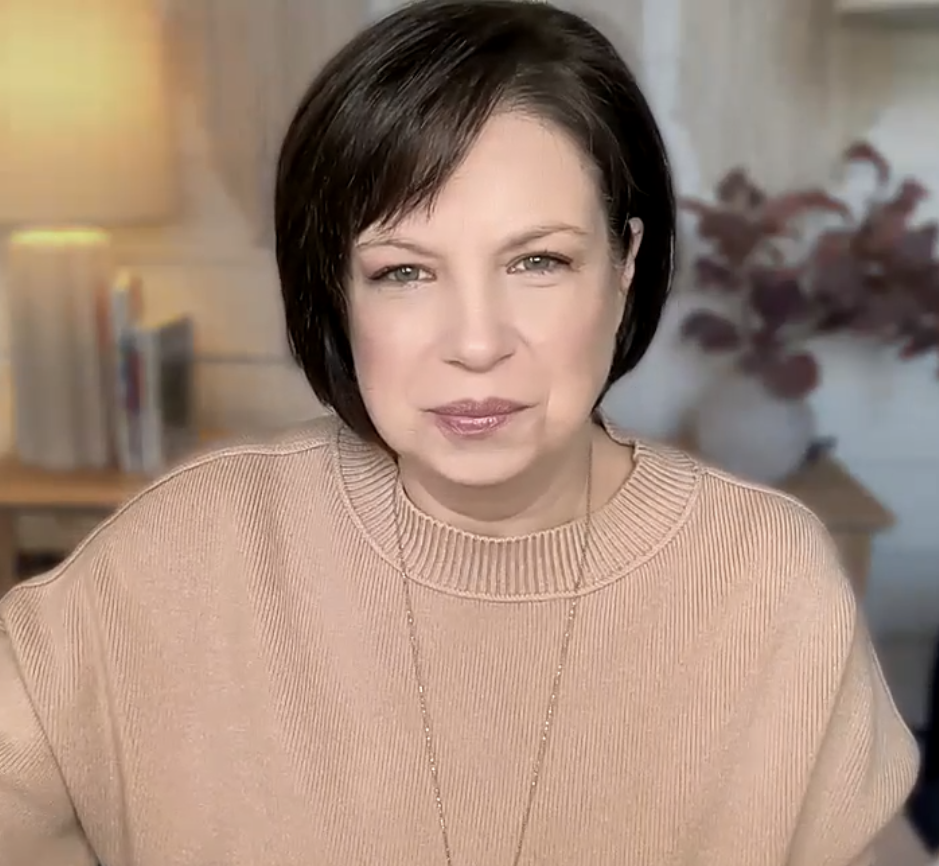
Hello!I'm Penny Williams.
Host of Beautifully Complex. I help stuck and struggling parents (educators, too) make the pivots necessary to unlock success and joy for neurodivergent kids and teens, themselves, and their families. I'm honored to be part of your journey!

Free Community Hub
You don't have to do this alone! Find calm, confidence, and connection inside the FREE Beautifully Complex Parenting Hub.
Decode Your Kid's Behavior IN < 3 MINUTES
Take my FREE Animal Instincts Quiz to understand your child's biological stress response and get focused on what will help you and your kid RIGHT NOW.
FREE VIDEO SERIESQuick Start: 3 High-Impact Actions to Transform Behavior
Transforming negative or unwanted behavior is a long and complex process. HOWEVER, there are a few actions you can take right now that will provide a big impact. These 3 high-impact strategies address foundational aspects of behavior, empowering you to help your child feel better so they can do better.
A Few of My Favorite Tools
Time Timer
Makes time visual.
Mighty + Bright
Manage chores and routines while building self-confidence and independence.
Mightier
Blends gaming with off-screen activities to teach coping skills through play.
Howda Hug Chair
A chair that gives kids a sensory hug.