361: Getting on the Same Page with Your Co-Parent
with Martina Nova, MCP, RCC

Listen on Apple Podcasts | Spreaker | Spotify | iHeart Radio
Parenting a neurodivergent kid is already one of the most demanding roles a person can hold. Add a co-parent with a completely different approach, a different upbringing, and a different nervous system, and the friction can feel relentless. Whether you are parenting side by side under the same roof or navigating two separate households, those differences in how we each show up as parents can create real strain, and in families raising neurodivergent kids, the stakes feel even higher.
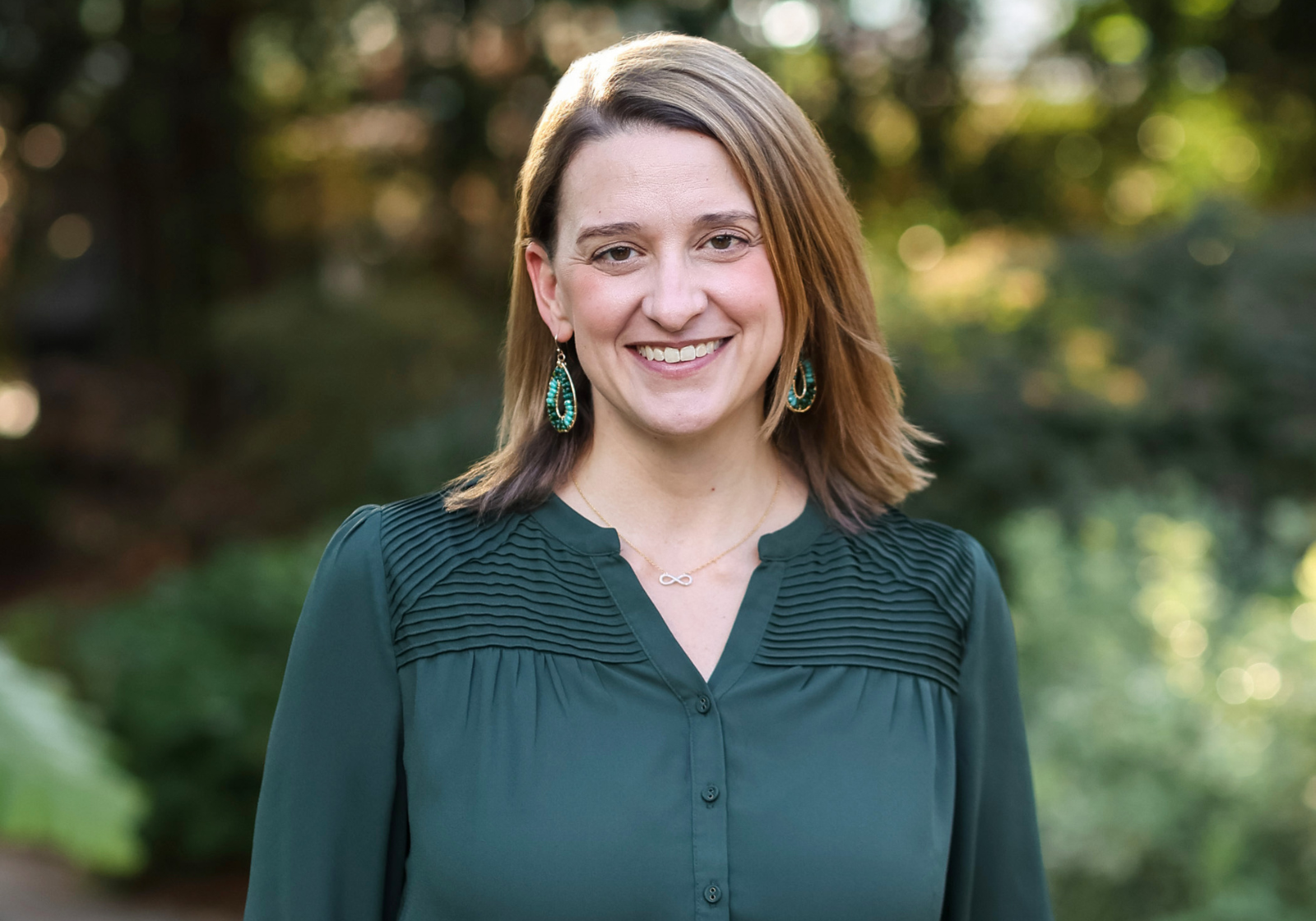
In this episode, I sit down with Martina Nova, a registered clinical counselor, co-parent, and author of Same Page Parenting, a book of conversation starters designed to help partners understand each other more deeply before, during, and long after having kids. Martina brings both professional expertise and lived experience.
We explore what actually drives those differences in parenting approaches, hint: it goes way deeper than personality. We talk about the invisible mental load that so many parents are quietly carrying, often alone, and why one parent becoming the default parent happens gradually, without anyone choosing it. Martina walks through how to have the conversations that actually get underneath the conflict, especially when disagreements are really about fear, grief, or identity, not just strategy.
We also get into what it means when your child falls apart with you but holds it together with the other parent, and why that is not a sign that something is wrong with you or your relationship. This episode is full of warmth, honesty, and real tools you can start using today.
Hit play, and let’s talk about what it really looks like to parent as a team, even when it is hard.
There is a moment many parents of neurodivergent children recognize. One parent has been to every appointment, read every book, implemented every strategy, and learned to speak the language of their child’s needs fluently. The other parent loves their child just as much, but the gap in knowledge has grown so wide that stepping in feels risky. So they step back. And the load gets heavier.
This is what Martina Nova, a registered clinical counselor and author of Same Page Parenting, describes as the invisible mental load of parenting. It does not arrive by agreement. It accumulates by repetition. “One parent starts handling the appointments, the school communication, the routines,” she explains. “They learn the systems, they learn the language, they learn the child’s cues, and over time they become the one that everything funnels through.”
For families raising neurodivergent children, that imbalance tends to deepen. There are more therapies, more school meetings, more research to be done, more to track and coordinate. And the parent doing most of it often ends up feeling not just exhausted, but alone in a role that was supposed to be shared.
Nova says the friction that builds between co-parents is rarely just about parenting tactics. Underneath disagreements about screen time or medication or how to handle a meltdown, there is almost always something older and more personal. Our own childhoods shape what feels right to us as parents, sometimes in ways we have never examined. A parent raised in chaos may crave rigid structure. One whose emotions were dismissed may now find big feelings overwhelming, or over-correct by refusing to let their child experience any distress at all.
This matters especially when one partner resists getting a child evaluated or is skeptical of a diagnosis. “On the surface it looks like: should we get an assessment?” Nova says. “But underneath, it is a lot of the time the fear of labeling our child, the grief about expectations changing, or worry about stigma or judgment.” Many neurodivergent traits are hereditary, and a child’s diagnosis can stir up unresolved feelings in a parent who may have spent a lifetime quietly struggling themselves.
The shift Nova recommends is deceptively simple: slow the conversation down and get curious about what is underneath it. Instead of debating the decision itself, ask what the other person is afraid of. What would it mean to them if this were ADHD? If this were autism? What do they see their child struggling with today? Moving from the conflict between the parents back to the experience of the child can open a door that argument keeps closed.
When it comes to redistributing the mental load, Nova is clear that communicating more is not enough. What helps is making the invisible visible by mapping out what each person is actually tracking and deciding, then shifting from helping to owning. Not assisting with bedtime, but being the person fully responsible for it. Not getting a summary of the school meeting, but attending it.
She also names something that many primary parents will recognize: the need to step back and let the other parent learn, even imperfectly. “I need to allow my partner to mess up, to learn on their own, to do it their own way,” she says, “as long as we are aligned in our vision that we want our kids to feel safe.”
And when a child seems to fall apart with one parent but hold it together with the other? Nova reframes it entirely. The parent receiving the emotional collapse is not doing something wrong. They are the person their child trusts most to handle it. “Heavy lies the crown,” she says. “You feel most comfortable with me to fall apart. That means I have to do the brunt of the regulating, and that is a challenge. But in a way I feel honored, as hard as it is, to have that reaction from them.”
Getting on the same page does not mean becoming identical as parents. It means understanding where the other person is coming from, and being willing to be understood in return.
The invisible mental load in families with neurodivergent kids does not happen by choice. It happens by repetition, and, over time, it creates a knowledge gap that makes the less-involved parent feel behind, uncertain, and more likely to step back even further.
Disagreements between co-parents about diagnosis, medication, or parenting approaches are rarely just about the issue itself. They are almost always rooted in fear, grief, identity, or unresolved experiences from our own childhoods that have never been named out loud.
When your child saves their biggest emotional fallout for you, it is not a sign that you are doing something wrong. It is a sign that they feel safe enough with you to let it all out, and while that is hard to carry, it is also one of the most meaningful things a parent can offer their child.
Why you and your co-parent parent so differently, and why it almost always traces back to your own childhood experiences, nervous system, and the invisible rules you each grew up with
How the invisible mental load builds over time without anyone choosing it, and what it actually looks like to shift from one parent helping to one parent fully owning a responsibility
What to do when you cannot agree on something big like a diagnosis or medication, including the specific questions that can get underneath the conflict and open a real conversation
Why your child may fall apart with you but seem totally fine with your co-parent, and why that difference is not a sign that something is wrong with your relationship
What the first step looks like when you want to start getting more aligned with your co-parent, including how to begin when you do not even know where the disconnect started
Martina Nova, MCP, RCC
As both a therapist and a mother of two, Martina brings a deeply human perspective to parenting conversations. She is passionate about helping couples navigate the mental load, identity shifts, and relational strain that can emerge while raising children (especially neurodivergent ones) so families can move toward more connection, understanding, and shared responsibility.
Some of the resources may be affiliate links, meaning I receive a commission (at no cost to you) if you use that link to make a purchase.
Same Page Parenting by Martina Nova, MCP, RCC: A book of conversation starters for co-parents covering more than 36 topics including mental health, gender roles, finances, trauma, and neurodivergent parenting.
Fair Play by Eve Rodsky: A framework and book for couples addressing the invisible mental load and how to redistribute domestic and parenting labor more equitably.
Subscribe to Clarity — my weekly newsletter on what’s working in business right now, delivered free, straight to your inbox.
Beautifully Complex Podcast
361 Getting on the Same Page with Your Co-Parent, with Martina Nova, MCP, RCC
[00:00:00] Penny Williams: Welcome back everyone to Beautifully Complex. I'm so glad that you are joining us and listening to this episode. Today I have with me Martina Nova, and we're going to talk about co-parenting and the challenges that neurodivergent parents face. Whether you're co-parenting together in the same household or co-parenting separately, there are challenges with different parenting approaches, and so we're going to explore why that happens and also what you can do to help improve things in that area.
[00:00:38] Penny Williams: Martina, will you start by letting everybody know who you are and what you do, and then we'll jump in?
[00:00:45] Martina Nova, MCP, RCC: Of course. So my name is Martina, and I'm a registered clinical counselor in Vancouver, BC. I'm also a mom of two, and I'm a co-parent. I recently wrote a book called Same Page Parenting, and it's a book of conversation starters. There are over 36 different topics covering different types of conversations that we could be having before we even have kids and all throughout our kids' development with one another. It's not about identical parenting or doing things exactly the same way, but it's about understanding where do we come from, what are we carrying into the relationship, what are we carrying into parenting from our own experiences. What kinds of conversations would be helpful to have other than the typical ones like how many diapers should we buy or what kind of food do we want to start the kids on.
[00:01:38] Martina Nova, MCP, RCC: But more mental health-based, real-life, rich conversations.
[00:01:44] Penny Williams: I'm so excited to explore this because so many coaching clients, and my own family, we really struggled, my husband and I, for a long time to get on the same page with parenting. All of the neurodivergence was layering on just more difficulty, and it was a really long process. It was really difficult. And I talk to parent after parent after parent who has a similar struggle. So can we define what you mean when we talk about co-parenting?
[00:02:20] Martina Nova, MCP, RCC: Absolutely. So I call myself a co-parent as well because my husband and I are separated, so we live in two separate homes, but we still parent our kids. We try to understand where each other is coming from. We consult with one another about parenting techniques, what worked, what didn't. So I'm a co-parent in two separate houses. And so whether you're parenting in the same house or in two separate homes, that's the way I'm using the terminology here.
[00:02:55] Penny Williams: What do you think drives these differences in the way we view parenting and the ways we go about it? I imagine our own childhood and some other things are playing into that.
[00:03:19] Martina Nova, MCP, RCC: Yeah, absolutely. One of the ways I set up the book is exactly like what you're saying. There's a section for each topic that says, before you even have kids, here are some of the conversation starters you should have based on this particular topic. A lot of what this gets at is your own childhood. How you were parented shapes what feels right to you right now as a parent. So maybe if you grew up around chaos, you might crave structure and control in your own house now. Or if you grew up with a lot of control, you might value flexibility and autonomy. Or if your emotions weren't validated by your parents, big feelings can feel overwhelming or too much, or you might now try to over-validate your kids and protect them from any distress.
[00:04:17] Martina Nova, MCP, RCC: So a huge part of it is our own childhood, but there are also things like nervous system differences, core values, personality and temperament, gender roles, social conditioning, culture, understanding stress, and burnout capacity. There are a lot of different things that affect how and what we bring to our own parenting.
[00:04:44] Penny Williams: I've heard the term re-parenting a lot lately, and trying to work through those things from our past, our childhood, the ways that we were raised, to try not to bring them into our parenting negatively. Do you find that can be a really helpful avenue?
[00:05:15] Martina Nova, MCP, RCC: Absolutely. And it's so tricky because I work with individuals and parents and couples who are in the trenches of newborn life, and some of this is just coming up now. But I've also worked with people who have adult children, and the way they're responding or the conflict they're having with their adult children still predates back to expectations or triggers rooted in what their parents did with them.
[00:05:50] Martina Nova, MCP, RCC: They might think, my parent didn't really do this for me, so I don't think I should do this for my kid. And what we're talking about could be things like emotional validation, or giving children space to make their own choices around gender expression, values-based living, or dietary preferences. Sometimes it can seem so small, but if it comes from our own upbringing and there are triggers associated with it, then no matter what stage of parenting we're at, it's going to creep up on us until we become aware of it and can choose to act differently. But if we're not having these conversations and we're not aware, we're kind of just on autopilot.
[00:06:39] Penny Williams: Yeah. It's not something we think about when we're younger or when we're choosing a partner, but the ways that we were each raised is hugely influential. My husband was raised in an abusive household in a lot of ways, so he didn't even really have a good example of what a family unit that functions well and shows each other how they care looks like on a daily basis. Obviously he doesn't want that same environment for his own kids, but it still really impacts the ways that he views situations, the ways he interacts with people. It's been a real journey for him to figure out where some of that comes from and how to work through those feelings.
[00:07:51] Martina Nova, MCP, RCC: Absolutely.
[00:07:52] Penny Williams: I want to talk a little bit about something I saw recently when I was scrolling through Instagram. Someone was talking about how we don't share the mental and emotional responsibility of parenting equally a lot of the time. I commented yes, yes, yes, because this is so true. Especially when we're talking about kids who are neurodivergent, we have more therapies, more doctor's appointments, more school meetings, and it tends to be that there's one parent who takes on that role, heads it up, and it feels unfair. It feels like a burden. Can you talk about what that looks and feels like, and then maybe we can talk about how to shift that dynamic?
[00:08:59] Martina Nova, MCP, RCC: Of course. So what you're talking about is a blend of a few things. It's the invisible mental load, a mix of patterns and systems and capacity and gender expectations, and it's kind of like someone becomes the default parent. Not by agreement, not by sitting down and deciding, but by repetition. Maybe one parent starts handling the appointments, the school communication, the routines. They learn the systems, they learn the language, they learn the child's cues, and over time they become the one that everything funnels through. And we might hear things like, oh, you're just better at it, which often just means you've been carrying it longer and you've taken time to notice.
[00:09:50] Martina Nova, MCP, RCC: And sometimes it's because of gender expectations. In heteronormative relationships it does often become the mother, and also because evolutionarily moms are often the one who soothes and emotionally notices and takes the temperature of their space. With neurodivergent kids, that parent has to be even more on guard. That turns into a kind of power dynamic. That parent is also the one who does the research, talks to the professionals, learns the strategies. Over time the imbalance grows, and the other person may feel behind or unsure or like they're going to do it wrong, so they step back. But that only widens the gap further. It's not that they don't care. It's a lack of confidence which turns into avoidance, which adds more load on the other person.
[00:11:04] Penny Williams: And when one partner is going to the appointments and doing the research, it can come across to the other partner as being told how to parent, which doesn't feel good and can cause even more problems. So what conversations can we have to try to share those invisible loads more evenly?
[00:11:34] Martina Nova, MCP, RCC: There are a few. I based a lot of my chapter on the invisible mental load on some great resources already out there, like Fair Play by Eve Rodsky. In my book I give specific examples of conversation starters. The first is making the invisible visible. We're mapping it out. We might say, what are you tracking mentally every day? What decisions are you making alone? And then we shift from helping to ownership. Ownership looks like, which piece of this are you going to handle fully on your own? Here's what I do, which one do you want to take on? Okay, you handle school communication fully. You're in charge of bedtime routine. We're not assisting. We're owning. And another big part is closing the knowledge gap. The primary parent might ask the other, what do you feel behind on? What would be helpful to know? I have a plethora of resources, so instead of throwing them all at you, is there a way I could make it more accessible? Or could you come to me and tell me what you're really struggling with?
[00:13:07] Martina Nova, MCP, RCC: We can share resources. We can attend appointments together when possible. We can let the other parent practice without stepping in, especially with neurodivergent kids who might have strong preferences or get easily dysregulated with one parent more. That will become a practice for the primary parent too, to take a step back. Even though it won't be perfect, how do I take care of myself when my partner does bedtime a little differently? It's hard in the beginning. I want to step in and fix it because I know I could do it better. But a big part of it is I need to allow my partner to mess up, to learn on their own, to do it their own way, as long as we're aligned in our vision that we want our kids to feel safe and not be in danger. That might mean we actually do bath time a little differently, and that might be okay.
[00:14:14] Penny Williams: Can we explore having some kind of system that parents can go through together to define the vision, their values, how they're going to handle different situations? Would something like that help to get on the same page? Would it help to sit down and have a structured conversation and write out what you're agreeing to in terms of how you parent?
[00:14:51] Martina Nova, MCP, RCC: That question is exactly what prompted me to write this book in the first place. A lot of people will say there should be some kind of compatibility test before we have kids. My goal with this book is not about scripting every situation, because you don't know what you don't know. You might have conversations before you have kids and think, I'm going to lead with intuitive eating because I was raised in a house where if I didn't finish my food I'd get yelled at. So I'm not going to force my kids to eat. But then my kids are two and four and they have no interest in sitting and eating. And just the other day I was chasing them around feeding them breakfast because I know if they don't eat they'll get more dysregulated. So something I thought I would never do became necessary. These pre-kids conversations are more about awareness. Not how am I going to parent in this situation, but where do my ideas about gender roles, financial literacy, or postpartum mental health come from?
[00:17:05] Martina Nova, MCP, RCC: Nobody really talks about how scary intrusive thoughts can be after you have kids. Nobody talks about how the non-birthing partner can get postpartum anxiety and depression. Or how intimacy changes after having children and what the expectations really are. A lot of the pre-kids conversations are about what do I know about this topic, how did it come up in my home, what am I being taught, and how might I respond if this kind of thing happens, but not in a rigid way. Where do I think I would lean, is there flexibility, and why? So it's a lot more about the why than scripting what I'm going to do.
[00:18:03] Penny Williams: So self-reflection and exploration, but also intentionality. Being intentional about the way we're going to parent versus just falling into it and hoping we get it right. And being more intentional is definitely helpful with neurodivergent kids because there are extra things that happen in our households that we need to figure out how to manage. I'm wondering about what happens when you cannot agree on something. I get this question a lot. Sometimes one parent isn't okay with diagnosis or evaluation, or is against medication. Or it can be simpler basics, like how you handle it when your child speaks to you unkindly. How do we work through it when we can't agree?
[00:19:16] Martina Nova, MCP, RCC: So the first part of what I'll say is that the small disagreements we think are about the thing itself are usually more based around identity and fear and values. So when we first get curious about what's going on for the other person, or what's going on for me here and where this is coming from, it gets underneath the conflict. That curiosity is first. And secondly, underneath things like not agreeing to diagnose or try medication, on the surface it looks like that. But underneath it's often the fear of labeling our child, the grief about expectations changing, or worry about stigma or judgment, or sometimes people might think this means something about me as a parent. One parent might be moving toward understanding and support, but the other might be protecting against fear or loss or shame. And that's where our own childhood comes up, because a lot of neurodivergences are hereditary. If we're talking about a kid being assessed for ADHD or autism, and maybe you have it yourself, undiagnosed, or you've always struggled, or you've had experiences of being labeled or feeling othered, that's all in the room. Because of this, if we have a hard time getting underneath it, a therapist or a coach could really help expose some of those pieces and ask, what is it we're really talking about here, what are we really afraid of.
[00:21:54] Penny Williams: So really trying to gain their perspective and figure out what's driving it. That's the same approach we take with challenging behavior. What's underneath it? Let's understand it, and then we can gain some traction. And we don't think about applying that to each other in our adult relationships. But I love that perspective because trying to push someone to see your perspective isn't really helpful. If you're trying to see theirs, you're building a bridge.
[00:22:41] Martina Nova, MCP, RCC: Absolutely. And I can give a few specific examples of what those questions could sound like. The first piece is how do we slow the conversation down and name the fear? Instead of debating the decision itself, we go underneath it. We might ask, what worries you most about getting a diagnosis for our kid? Or what feels hard about the idea of medication for you? Or what would it mean to you if this is ADHD, if this is autism? And then we move away from the conflict between the parents and focus on the child's experience, not the label itself. If ADHD or autism feels too loaded, we come back to, let's talk about what our child is struggling with right now. Where are they getting stuck? What support do they need today? And sometimes the other parent actually doesn't understand or see it. They're like, they seem sensitive when I come home from work, but they seem pretty normal to me. That happens a lot. So sometimes the primary parent can say, maybe you don't see this, but here's what I see our child struggling with. This is why I believe they need support. We don't need full agreement that both parents see the exact same struggles. We just want to hear from the child's experience and focus on that instead of the conflict between the parents.
[00:25:02] Penny Williams: As you were talking, I was thinking about how many parents have said to me that their child acts differently for one parent than the other. Like, my kid is fine with me, I don't know what you're talking about. Is it a matter of bringing them into those situations and letting them see what you're talking about? How do you handle the conversation when one parent feels like they're getting the brunt of the challenge and the other parent feels like it must be you?
[00:25:59] Martina Nova, MCP, RCC: I actually connect to that personally because just a few weeks ago, in a session with our parenting coach, my ex said the kids are fine at his place, transitions are okay, bedtimes are good, they sleep through the night. And then the coach asked how it was at my place and I said, well, it's a little bit different. And a lot of the reason that happens, I want to say first, it is not the fault of the parent who is getting the brunt of it. It's not the fault of the parent who isn't getting any of it. Some of this is just biologically based safety. When my kids have been with my parents all day and I show up, immediately my son collapses into my arms and cries and wants me to take him to the bathroom. He won't let anybody do anything for him. There's that heavy lies the crown idea, where you feel most comfortable with me to fall apart. That also means I have to do the brunt of the regulating, and I have to regulate myself before I can be present for my kids. That's a challenge. One of the ways to expose this is through a mediator, like a parenting coach. In that session, my ex saw it and said, I wouldn't have guessed it was that hard for you. And the coach said, what we want to do is continue giving our kids, even across two separate homes, a similar level of emotional safety and validation, learn to regulate yourself, learn to notice the emotions your kids might be feeling, and give them opportunities to release their energy and stimulation. That way your kids can start to feel, okay, I'm allowed to have this feeling here. My dad noticed I was feeling grumpy and he didn't tell me to just stop or that he'd give me something to cry about. Ways that we make our kids feel seen. So that's what we continue to focus on, how do we make our kids feel seen and attuned. Right now I'm getting the brunt of the emotional fallout, but I also recognize that it means they feel really safe with me to do that.
[00:29:19] Martina Nova, MCP, RCC: And in a way I feel honored, as hard as it is, to have that reaction from them.
[00:29:25] Penny Williams: Love that. Emotional safety is something we talk about a lot for our kids, and nervous system safety, but we don't talk about it in our relationships. When we're having tough conversations with each other or struggling to get on the same page, giving cues of safety to each other can be really powerful. It can diffuse the feelings so we can talk it through. Is there one first step that a parent listening to this can walk away and start to implement?
[00:30:10] Martina Nova, MCP, RCC: Yes. If you're noticing there's a difference in the invisible mental load at home, or there's differences in gender roles or family structure, or your mental health is struggling, or you want to talk about how your own neurodivergence shows up and you haven't really talked about this with your partner but you want to start, I would say it can be really helpful to go through a book like this. Because I don't know of another resource that looks at these chapters and says, okay, right now I'm struggling with finances, or there's shame around it, and here are some conversation starters I could bring to my partner. In my chapter on financial literacy there are questions like, what memories do you have around money growing up, and what emotions come up when you revisit them? Or if it's about trauma, it could be things like, growing up what was the environment like at home? Did I feel safe coming home? Was there predictability? And how might that affect how I show up today? So first, figure out what you feel like you're not on the same page about or what you're struggling with. Then the biggest part is communicating it with your partner. We can get really good at doing our own self-help, all our own reflection, having all these resources. But it's different than sitting down and actually getting to know each other's inner worlds. That part gets lost sometimes after we have kids. We don't have time, we don't have energy. So get curious about specifically what feels off or what you'd like to see different. Reflect on that for yourself. But don't forget to bring your partner in and get to know their side too.
[00:33:04] Penny Williams: Yeah. It's a great place to start. I'm so thankful for the work that you're doing, Martina, and for you being here and sharing some of your time and wisdom with all of us. I'm going to link Martina's book, website, and socials up in the show notes for this episode, and you can find those at parentingadhdandautism.com. Thank you again, and thanks everybody for listening. I will see you next time. Take good care.

hey there!
I help stuck and struggling parents (educators, too) make the pivots necessary to unlock success and joy for neurodivergent kids and teens, themselves, and their families. I’m honored to be part of your journey!

Hello!I'm Penny Williams.
Host of Beautifully Complex. I help stuck and struggling parents (educators, too) make the pivots necessary to unlock success and joy for neurodivergent kids and teens, themselves, and their families. I'm honored to be part of your journey!

Free Community Hub
You don't have to do this alone! Find calm, confidence, and connection inside the FREE Beautifully Complex Parenting Hub.
Decode Your Kid's Behavior IN < 3 MINUTES
Take my FREE Animal Instincts Quiz to understand your child's biological stress response and get focused on what will help you and your kid RIGHT NOW.
FREE VIDEO SERIESQuick Start: 3 High-Impact Actions to Transform Behavior
Transforming negative or unwanted behavior is a long and complex process. HOWEVER, there are a few actions you can take right now that will provide a big impact. These 3 high-impact strategies address foundational aspects of behavior, empowering you to help your child feel better so they can do better.
A Few of My Favorite Tools
Time Timer
Makes time visual.
Mighty + Bright
Manage chores and routines while building self-confidence and independence.
Mightier
Blends gaming with off-screen activities to teach coping skills through play.
Howda Hug Chair
A chair that gives kids a sensory hug.