352: Navigating Childhood & Adolescent Anxiety

with Dr. Vanessa Lapointe

Listen on Apple Podcasts  |  Spreaker  |  Spotify  |  iHeart Radio

Anxiety isn’t always what it looks like, and sometimes what we’ve been told to “fix” isn’t actually the problem at all. In this conversation, I sit down with Dr. Vanessa Lapointe to unpack a deeply compassionate and eye-opening perspective on childhood and adolescent anxiety that shifts everything.

Instead of focusing on eliminating anxious feelings, we explore what it really means to zoom out and look at the environments our kids are navigating every day. Because so often, their anxiety isn’t a flaw to fix, it’s a signal that something around them isn’t aligned with what they need to feel safe, supported, and able to thrive.

We talk about what it looks like when anxiety shows up as irritability, control, defiance, or even shutdown, and why labeling kids as manipulative completely misses what’s actually going on underneath. Dr. V shares powerful, practical ways we can strengthen our connection with our kids, even when we can’t change the environment entirely, and how that connection becomes a protective “shield” they carry with them.

You’ll also hear how to begin decoding what your child truly needs, how to approach challenges with curiosity instead of judgment, and why shifting from diagnosing the child to examining the environment can be a game changer.

This is one of those conversations that invites you to soften, to see your child differently, and to trust your instincts as a parent.

Listen in and discover a more connected, compassionate way to support your anxious child.

When a child is anxious, our instinct is often to try to make the anxiety go away. We look for strategies, tools, or interventions that will calm the feeling, reduce the behavior, or help them “cope better.” But what if anxiety isn’t the problem to solve? What if it’s actually a message?

So many children today are navigating environments that don’t align with how their nervous systems, brains, and bodies are wired. Structured classrooms, constant demands, sensory overwhelm, social expectations, and pressure to perform can all create a chronic sense of stress. When a child becomes anxious in that context, it may not be a dysfunction, it may be an appropriate response.

This perspective requires us to zoom out. Instead of focusing only on what’s happening inside the child, we begin to examine what’s happening around them. Is the environment supportive? Is it flexible? Does it honor who they are and what they need?

At the same time, there are limits to how much we can change external environments like school. This is where the parent-child relationship becomes essential. Connection acts as a buffer, a stabilizer for the nervous system. When a child feels deeply seen, valued, and supported, they carry that sense of safety with them, even into challenging spaces.

This is about presence. It’s about communicating, consistently and clearly, that your child’s worth is not dependent on performance, behavior, or compliance. That they are valued simply because they exist.

Anxiety in children also rarely looks the way we expect. It can show up as irritability, defiance, control, avoidance, sleep disruption, or even physical symptoms. These behaviors are often misunderstood as willful or manipulative, but they are better understood as adaptive responses. The child is trying to manage something overwhelming with the tools they have.

When we shift from judgment to curiosity, everything changes. Instead of asking, “How do I stop this behavior?” we begin asking, “What is this behavior trying to tell me?”

From there, we can start to “sniff around,” gathering information with openness and compassion. Listening more deeply. Exploring possibilities. Considering unmet needs, learning differences, sensory challenges, or emotional overwhelm.

Supporting an anxious child isn’t about controlling them or eliminating discomfort. It’s about creating alignment, strengthening connection, and becoming a steady, safe presence they can rely on.


3 Key Takeaways
01

Anxiety is often a signal, not a problem to eliminate. When we shift our focus from fixing the child to understanding the environment, we open the door to more meaningful and lasting support.

02

Connection is one of the most powerful protective factors we can offer our kids. When they feel deeply valued and supported, that sense of safety travels with them into difficult situations.

03

Challenging behavior is often an adaptive response, not manipulation. When we approach it with curiosity instead of judgment, we’re better able to uncover what our kids truly need.

What You'll Learn

How anxiety can be a response to misaligned environments rather than something to “fix”

Ways to strengthen connection so your child feels supported even when you’re not physically present

What anxiety really looks like in kids beyond the typical signs

How to approach challenging behavior with curiosity instead of labeling it as manipulation

A simple way to start identifying what your child actually needs

MY GUEST

Dr. Vanessa Lapointe

Dr. Vanessa Lapointe, a parenting educator, best-selling author, and international speaker,
transitioned from practicing psychologist to global parenting advocate. With a psychology doctorate and over 20 years of experience, she now leads The North Star Developmental Clinic, supporting families by helping adults view the world through children’s eyes.

Resources

Some of the resources may be affiliate links, meaning I receive a commission (at no cost to you) if you use that link to make a purchase.

Subscribe to Clarity — my weekly newsletter on what’s working in business right now, delivered free, straight to your inbox.

Work with me to level up your parenting — online parent training and coaching  for neurodiverse families.

Our Sponsor

Russell Coaching

You know your child is smart.

But organization, motivation, and confidence sometimes get in the way.

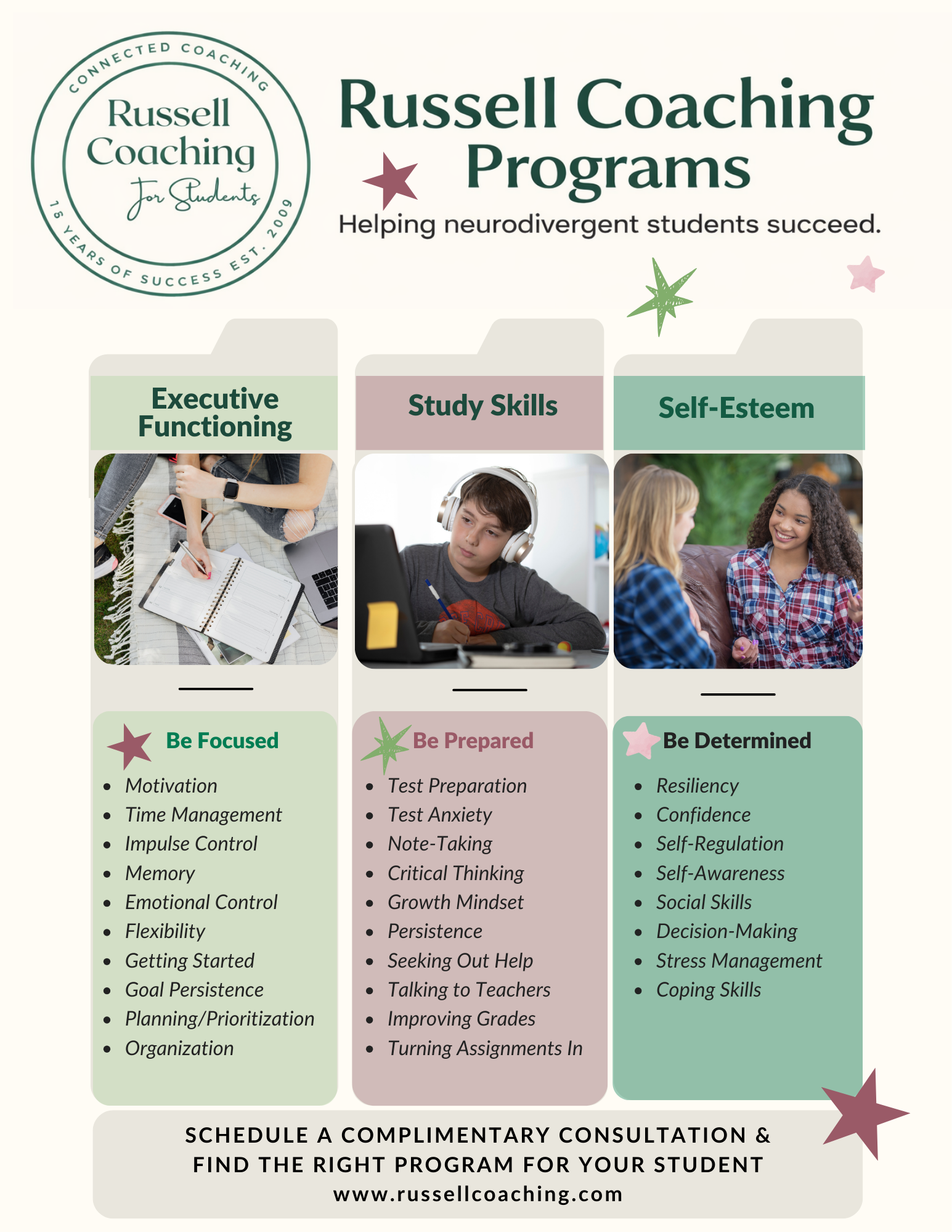
At Russell Coaching, we help students build executive functioning, study skills, and self-esteem so they can thrive in school and life.

Schedule a complimentary consultation with Dr. Norrine Russell today to find the right program for your student.

Reference this ad and get $100 off the Intake Fee and 10% off our regular coaching fees for three months.

Transcript

Beautifully Complex, Ep. 352
Navigating Childhood & Adolescent Anxiety, with Dr. Vanessa Lapointe

00:00:12] Penny Williams: Welcome back to Beautifully Complex, everyone. I am so happy to have many caring adults here with us listening. I have Dr. Vanessa Lapointe with me, Dr. V, to talk about anxiety, and we’re going to have a conversation about anxiety that is probably going to be different than other conversations you’ve heard. I’m really excited to unpack that. So, Dr. V, will you start by letting everybody know who you are and what you do?
[00:00:47] Dr. Vanessa Lapointe: Yeah. So I am a mom, first and foremost, to two growing young men now who are 19 and 22 years of age. I practiced as a psychologist for more than 20 years before leaving that profession a few years ago to launch an international parenting support platform. And so I’ve really been, for about 25 years now, walking alongside kids and parents and families, just really seeking to champion them to live their best lives.
[00:01:19] Penny Williams: I love that. Tell us your perspective on anxiety and how it might be different from the more traditional model.
[00:01:29] Dr. Vanessa Lapointe: Yeah, so it’s interesting because there’s a lot of talk about anxiety these days. I think that’s a reality for a lot of people. And with that, there becomes a lot of chatter about what you’re supposed to do if somebody’s anxious.
I was trained in a school of thought that I’ll refer to as behaviorism and came into a school of thought that I’ll refer to as developmentalism over the arc of my career, not just professionally but also personally when my youngest son was impacted by anxiety.
I needed to figure out what we were going to do and what felt aligned for me. Where I have landed is this idea that where we often begin with anxiety treatment is not where we should be beginning.
We usually begin by focusing on what’s happening inside the child or inside the parent—the feeling of anxiety—and then we get busy trying to eradicate that feeling. My understanding is that we don’t start there.
In fact, we have to zoom the lens way out and really take stock of what’s happening around the child. We need to consider deeply whether that environment is working for them.
In the vast majority of cases, I would suggest that people who are feeling anxious should be feeling anxious because they are living in environments that are entirely incongruent with what they need as humans. Of course they’re anxious.
We don’t treat that by trying to anesthetize those thoughts. We treat it by sorting the environment so that it’s more aligned with what the person needs.
[00:03:25] Penny Williams: And we do push kids into environments. We have systems like school, and we say, “This is it. You have to figure it out.” So I can hear a lot of parents asking already, what do we do about environments where we don’t have as much influence?
[00:03:52] Dr. Vanessa Lapointe: It’s a great question and part of the messy middle we all live in. I think it comes down to two things.
One is to get fierce in how you approach adjusting the environment. It’s not just one conversation with a teacher. In my son’s case, it was many conversations—with teachers, counselors, administrators—to build a cohesive team and understand his needs.
Ultimately, I made what felt like a radical decision to remove him from that environment because it was so problematic. His older brother was fine, but my younger son wasn’t coping. I moved him to a school better aligned with his emotional and learning needs.
So first, get fierce. We often think we don’t have power, but we do. Get big about the environmental piece.
The second thing is connection. There’s something we can do as parents that activates this invisible string between us and our children so that when they’re away from us, they still feel connected. That connection becomes a kind of shield they carry with them.
[00:05:58] Penny Williams: Can you tell us what that looks like in real life?
[00:06:04] Dr. Vanessa Lapointe: Yeah. When my son was struggling, I couldn’t be at school with him all day. So I figured out how to “send myself” with him.
We visited his school playground on weekends and created invisible “stash spots” of kisses—under the slide, near the monkey bars. During the week, he knew where to go to get a little “mama top-up.”
I also gave him a small object—a little heart—that stayed in his backpack. When he needed comfort, he could squeeze it and feel connected to me.
But the deeper piece was instilling in him the truth of his worth. That who he is matters more than anything anyone else says. That he is valued simply because he exists.
And when children truly feel that, it becomes a shield. They carry that belief into hard environments.
[00:09:34] Penny Williams: I love that. I did something similar with engraved coins my son could carry. It helped remind him he was safe and connected.
How do parents start figuring out what their child actually needs? How do we “crack the code”?
[00:10:50] Dr. Vanessa Lapointe: It’s different for every family, but there are some guiding principles.
First, get very relationship-focused. Connection is life-sustaining. You could even say the opposite of anxiety is connection.
Second, be willing to “sniff around.” Stay curious. I missed my own child’s hearing loss and dyslexia at first, even as a specialist.
Be gracious with yourself. It’s hard to see clearly when you’re in it.
Really listen to your child. Don’t assume manipulation. See them as adaptive—they’re doing the best they can to cope with their circumstances.
When you approach them that way, you’re more open to seeing what’s actually going on underneath.
[00:13:47] Penny Williams: Yes. We’re not given a manual for this. And so often parents think their child is manipulative when really it’s about safety.
What are some other ways anxiety shows up?
[00:15:19] Dr. Vanessa Lapointe: Anxiety in kids often doesn’t look like what we expect.
It can look like irritability, refusal, meltdowns, or lashing out. It can feel very challenging and even unlikeable.
It’s not personal. It’s anxiety leaking out in the only way they know how.
You might also see sleep disturbances, physical symptoms like toileting issues, or rigid eating patterns.
It shows up in ways we don’t always recognize as anxiety.
[00:18:11] Penny Williams: Yes, I always say we should ask if anxiety is fueling behavior.
What about control? How does that show up?
[00:19:15] Dr. Vanessa Lapointe: Control can show up in ritualistic behaviors, sensory preferences, food, or even kids becoming very bossy—what I call “Hulk energy.”
We don’t want to just shut that down. We want to understand it.
The key is stepping in as the capable leader. Not in a harsh way, but in a supportive way that allows the child to rest instead of trying to control everything.
For example, with a lock-checking routine, the first step wasn’t eliminating it. It was putting the parent in charge of it so the child could feel understood and safe.
Then, gradually, the parent could reduce it.
[00:23:19] Penny Williams: That makes so much sense.
Can we talk about the parent’s role? How do we support without adding to anxiety?
[00:24:26] Dr. Vanessa Lapointe: I want to give all parents a free pass. A lot of anxiety comes from systems that focus on controlling behavior.
When we prioritize behavior over relationship, we can unintentionally squash a child’s spirit.
But we are a social species. Connection is essential. Without it, we feel unsafe.
So we need to come back to relationship as the foundation.
And instead of diagnosing the child, try diagnosing the environment. What’s out of alignment? What needs to shift?
[00:26:57] Penny Williams: I love that. That perspective makes it so much clearer.
Tell everyone where they can find you.
[00:27:33] Dr. Vanessa Lapointe: You can find me at drvanessalapointe.com. I also have an anxiety course, a membership community, and I share content regularly on social media to support parents.
[00:28:34] Penny Williams: Amazing. Thank you so much for being here and sharing your wisdom. I know this will help so many families.
Thanks for listening, everyone. I’ll see you next time. Take good care.

hey there!

I'm your host, Penny Williams.

I help stuck and struggling parents (educators, too) make the pivots necessary to unlock success and joy for neurodivergent kids and teens, themselves, and their families. I'm honored to be part of your journey!

Hello!
I'm Penny Williams.

Host of Beautifully Complex. I help stuck and struggling parents (educators, too) make the pivots necessary to unlock success and joy for neurodivergent kids and teens, themselves, and their families. I'm honored to be part of your journey!

Free Community Hub

You don't have to do this alone! Find calm, confidence, and connection inside the FREE Beautifully Complex Parenting Hub.

Decode Your
Kid's Behavior
IN < 3 MINUTES

Take my FREE Animal Instincts Quiz to understand your child's biological stress response and get focused on what will help you and your kid RIGHT NOW.

FREE VIDEO SERIES
Quick Start: 3 High-Impact Actions to Transform Behavior

Transforming negative or unwanted behavior is a long and complex process. HOWEVER, there are a few actions you can take right now that will provide a big impact. These 3 high-impact strategies address foundational aspects of behavior, empowering you to help your child feel better so they can do better.

A Few of My Favorite Tools

Time Timer

Makes time visual.

Mighty + Bright

Manage chores and routines while building self-confidence and independence.

Mightier

Blends gaming with off-screen activities to teach coping skills through play.

Howda Hug Chair

A chair that gives kids a sensory hug.

Binge the Latest Episodes
353-Podcast Main Post Image
353: Selective Eating & How to Help Fill Nutritional Gaps
Selective eating in ADHD and autism isn’t defiance. Learn how sensory needs, anxiety, and pressure impact eating—and what actually helps your child thrive.
351 Podcast Main Post Image
351: ADHD in Kids: Why Understanding Their Brain Changes Everything
ADHD diagnosis and masking shape identity, safety, and self-understanding. Learn why honest conversations about neurodivergence change long-term outcomes.
350 Podcast Main Post Image
350: Alternative School Options
When your child is surviving school instead of succeeding, this episode offers real alternatives, practical advocacy tips, and hope for finding a better fit.
349 Podcast Main Post Image
349: Tracking & Maintaining Progress
Tracking progress builds emotional regulation and resilience. Learn a 6-step framework to support your neurodivergent child intentionally.
Share your thoughts

Leave a Reply

Start Typing

Get the Support You Deserve

Raising a neurodivergent child is complex — but you don’t have to do it alone.
Join the free Beautifully Complex Community Hub and get access to expert guidance, real-talk parenting tools, and a village that actually gets it.

Let’s help your child thrive, without losing yourself in the process.