

378: Body Image, Comparison and Self-Image in Girls
with Erin Washington
Listen on Apple Podcasts | Spreaker | Spotify | iHeart Radio
I put a lot of my own body image struggle onto my daughter without ever meaning to, and I didn’t catch it happening until it already had. That’s exactly the kind of quiet, unintentional pattern Erin Washington and I dig into in this conversation.
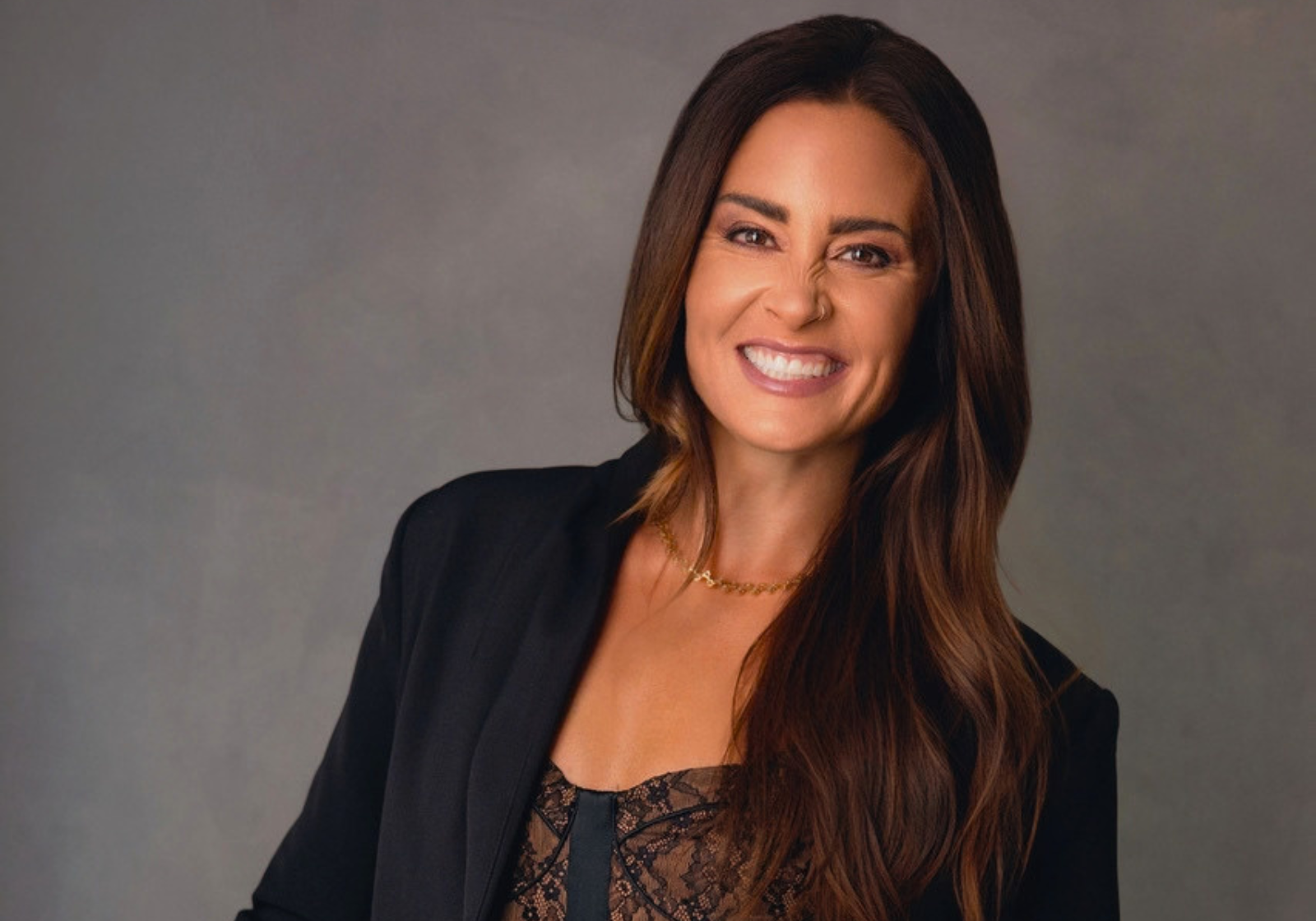
Erin spent two decades cycling through anorexia and exercise bulimia, much of it hidden behind being the perfectionist, the straight-A student, the driven athlete nobody worried about. She’s now the author of several books, including her newest, I’m Just Like Me, and the founder of the Blue Butterfly Foundation, which pairs teen girls struggling with self-image and body image with mentors who’ve lived through the exact same thing.
We talk honestly about what it actually looks like to model a healthy relationship with food and your own body in front of your kids, why physical compliments can quietly teach a child that beauty is their most important trait, and how something as small as a comment in the mirror or a diet before a big event gets absorbed by a watching child far more than anything you say directly to them. Erin also shares how representation shaped her own daughter’s sense of what’s possible, and why she wrote a children’s book explaining, in simple terms, why none of us are supposed to look like anyone else.
If you’ve ever wondered whether you’re passing along your own body image noise to your kids, or you’re just looking for language that helps your daughter feel more at home in her own skin, this conversation is full of real, doable shifts you can start using today.
Listen to the full episode now.
Most parents assume the danger for a driven, high-achieving child is burnout. Erin Washington, founder of the Blue Butterfly Foundation and author of several books on body image, argues it’s often something else entirely: the child no one is worried about.
Washington spent two decades navigating anorexia and, later, exercise bulimia, largely undetected because she was also the straight-A student, the Division I athlete, the oldest of four sisters who never needed reminding to study. “That driven, perfectionist personality can take a left into something dangerous,” she says. Her sisters, raised in the same house with the same expectations, never developed the same relationship with food or control. The difference, she says, wasn’t the environment. It was the wiring.
That distinction matters for parents raising kids who process the world differently, whether through anxiety, rigidity, or an intense need for mastery. A child’s temperament, not just their circumstances, shapes how ordinary pressures land on their nervous system, and a kid already prone to perfectionism or all-or-nothing thinking may be more vulnerable to turning body image or achievement into the one area they can control.
Much of what Washington now teaches parents centers on modeling rather than messaging. Children absorb far more from what they watch their parents do than from what they’re told. A parent stepping on a scale each morning, sighing over a mirror, or restricting food before a big event communicates something to a watching child, regardless of the words used. “It’s not what you’re saying to them,” Washington says. “It’s how you’re talking to yourself.”
She’s equally direct about physical compliments. Telling a child repeatedly how beautiful they are, she argues, quietly teaches them that their value is tied to appearance, a foundation that collapses the first time they don’t feel beautiful. Washington instead tells her own daughter she’s strong, kind, and a good friend, deliberately steering praise toward character rather than looks.
Food, in her framework, is treated as neutral, neither earned nor forbidden. Rather than requiring a child to clean their plate or ration treats, Washington asks her kids how a food will make their stomach feel and lets natural consequences do the teaching. Restriction, she’s found, tends to backfire, turning off-limits foods into the very thing a child fixates on.
Representation plays a role too. Washington, who is white, didn’t grow up questioning whether she belonged in the stories and images around her. Her biracial daughter did, which is what prompted Washington’s newest book, aimed at helping children understand that difference itself, in skin, hair, and body, is not something to explain away or apologize for.
The throughline across all of it is less about eliminating struggle than about interrupting silence. Shame, Washington says, only holds power in the dark. The antidote isn’t a perfect parent with a perfect relationship to food and body. It’s an honest one, willing to let a child see the mess, name it, and keep going anyway.
3 Key Takeaways
01
The child who never needs reminding to try harder is often the child quietly struggling the most, a driven, perfectionist temperament can turn body image or achievement into the one thing a kid feels they can control.
02
What you say to your kids about their bodies matters less than what you show them, a child absorbs the sigh in the mirror or the pre-vacation diet far more than any reassurance that follows it.
03
Praising a child’s strength, kindness, or effort instead of their appearance gives them something steadier to stand on, a foundation that doesn’t collapse on the days they don’t feel beautiful.
What You’ll Learn
Why a driven, high-achieving kid can be more at risk for body image struggles than the one you’re actively worried about
How to catch the body image messages you’re modeling without realizing it, from mirror talk to pre-event diets
A simple swap for physical compliments that helps your daughter build her sense of worth on something steadier than appearance
Why treating food as neutral, instead of something earned or forbidden, changes your kid’s relationship with eating
How representation shapes a child’s sense of what’s possible for their body, their career, and their future
My Guest
Erin Washington
Erin Washington is a non-profit founder, and host of the top podcast, thERINpy. Erin recently published her first children’s book, I’m Just Like Me, and has dedicated her career to helping others feel seen and embrace their worth. Through her nonprofit, Blue Butterfly, she’s an advocate for teen girls struggling with body image, comparison, and self-worth.
Resources
Some of the resources may be affiliate links, meaning I receive a commission (at no cost to you) if you use that link to make a purchase.
I’m Just Like Me, by Erin Washington
Squats & Margaritas, by Erin Washington
Blue Butterfly Foundation, thebluebutterflies.org
Therin P, Erin Washington’s therapy podcast
Erin Washington on Instagram
Subscribe to Clarity — my weekly newsletter on what’s working in business right now, delivered free, straight to your inbox.
Work with me to level up your parenting — online parent training and coaching for neurodiverse families.
Transcript
378 Girls and Body Image, Comparison and Self-Image, with Erin Washington
Penny: [00:00:00] Hey, everyone. I'm so glad that you have joined us today for this conversation. We are going to talk about body image, self-image, being the mom of girls, and what sort of representations and habits and thoughts we are putting on them, even if we don't mean to. And I have Erin Washington here joining me to have this discussion.
We're going to get deep into it, all the things that I think we've both struggled with, and really try to help some parents step back a little bit. I had to take a deep breath for that one, because I get stuck in it too. Erin, will you start though? Let everybody know who you are and what you do, your foundation, the book, all the good stuff.
Erin Washington: Well, first of all, thank you for having me. This is my favorite thing to talk about. It's so important. I [00:01:00] struggled for 20 years with body image, having no self-worth, comparing myself to other people, and I always say my stuff kind of stemmed from soccer. It was my identity. I played since I was four. In high school, I started varsity as a freshman. We were back-to-back state champions, and somehow I found my value as a soccer player. I played Division I soccer in college and put everything into it. And the body stuff, I would hide in soccer. In high school, I was severely anorexic, and I made it so I was fit and fast for soccer. And when a coach finally called me on it and said, "Your crosses aren't as strong anymore. You're losing all the strength in your legs," my eating disorder evolved into exercise bulimia. And this is something I feel like a lot of women do, and they don't realize it's an eating disorder, canceling out what you eat with exercise.
But mine was so severe, Penny, that I would jot down every calorie I ate. I would go on this elliptical in my parents' basement and work it off. So I [00:02:00] could show my coach I was eating, but I was working off every calorie. That continued into my college soccer career. And then midway through my sophomore year in college, I wasn't playing, and I wasn't used to that.
I never really came off the field, and kind of on a whim decided, "I quit. This isn't fair." And that's when I realized how much it was my value and my identity, and I fell into a deep depression. That's when bulimia came on. I always say, if there's a child in your life who is putting everything into one thing and seeing their value as that, you have to make sure they see value in something else.
Maybe it's a sport, or, like, my daughter's a competitive cheerleader, and that's her whole life, and one day that's not going to be in her life anymore. If that's how they see their value, it could be a slippery slope to an eating disorder. I also say I was the oldest of four girls, a complete firstborn perfectionist, and my mom wasn't worried about me.
My sisters would come home [00:03:00] if they had a C on a test, and it was like, "Hey, what were you doing?" I always had straight A's. There was a time I had a geometry teacher who would let you retake quizzes, and if I got an A-minus, Penny, I would wake up early and go back and get the A. And my sisters would be like, "What are you doing?" I'm like, "You can get the A if you just wake up early." And they were like, "We got a B, why would I..." I was just wired differently.
Penny: Yeah.
Erin Washington: But to say, if there's a child you're like, "Oh, no, not that one, she's so driven," that's the one you need to watch, because that driven, perfectionist personality, straight A's, can take a left into something dangerous like an eating disorder.
We all grew up in the same house. We all played Division I soccer, and no one struggled like I did. So I would say if you have a kid who's the perfectionist and you're like, "Oh, I don't have to worry about her, her grades are great," that's the one you do have to worry about. So I struggled with body image and the actual eating disorders, and then when I came out of my eating disorder mess, it was right when I met my husband, who was, I've [00:04:00] unpacked through therapy, shiny.
He was in the NFL, and it validated me that I was his pick. I didn't have a lot of confidence, so I was kind of on his arm, kind of finding myself, and had two kids. Got my body image noise off of me, and we can get into exactly how I did that, but long story short, I wrote a book, and in the book I decided to share about my eating disorders. I cultivated a community of other women who were like, "Me too," and who I'd never told anyone else. That went further into a podcast. I was going live talking about it during the pandemic, in 2020, and a radio station producer gave me a podcast. Then I wrote another book and started a foundation for teen girls struggling with self-image and body image, self-worth. It all kind of evolved from me unpacking something dark that was in my past. So now I talk to women about finding something that lights them up and getting out of the [00:05:00] mess and the struggle they may have lived with for decades, and how to model positive body image for your kids. I have a new book out to lay that foundation earlier in their lives.
Penny: Yeah. It's something that I really struggled with growing up. I was coming up in the late '80s, early '90s, all the magazines, right? All the super skinny girls, and I also have social anxiety, so I have this perpetual narrative in my head that I'm not good enough and everyone's judging me. So I was really focused on that body image.
It felt so incredibly important to me, and in that teen mindset, I don't know that anybody could have talked me out of it. How do we talk to our girls in ways that are going to help them feel different about it?
Erin Washington: It's like we practiced that, and we didn't. That's exactly what my foundation does, because it's the same thing. I would not talk to my [00:06:00] mom, and it's like I can hear all these things. Say this. I was super defensive. I was 16. I was super skinny, and my mom could see it, and she was like, "I want to help you."
But I was like, "You don't get it." And she'd be like, "You're beautiful." And I'm like, "You're my mom. You have to say that." So I created something called Blue Butterfly Foundation, where women who have been through that exact thing are mentors. We come back, and at our events, we share our stories. I talk about body image and eating disorder recovery. It goes further into toxic relationships, sexual identity. Anything a teen girl feels alone or ashamed about and isn't willing to talk to someone else about, there's a woman in our foundation who's been through that. And I would have talked to me, a 44-year-old woman who came back and was like, "Hey, me too.
I know exactly what you mean." I wasn't going to therapy, and I'm a big proponent of therapy. There was a part of my life, the bulimia was almost 10 years, and I couldn't get a hold of it. When I would consider talking to somebody about it, I pictured a man with a clipboard, like, "Tell me [00:07:00] your eating disorder."
And I'd be like, "You don't get it." So the foundation provides mentorships from women who have been through that exact thing, and I'm telling you, it's magic. They come in kind of hot and kind of like, "What is this?" And you just see their guards go down as we share our stories first. Then we go into smaller groups, and you can see the girls gravitate to the person whose story impacted them more, and they come to the smaller group with that person.
We share, then we go back to the big group and share anything that came out in the little group, and people are crying, and it's just raw. And sometimes, if it's the younger girls, like 12 or 13, their moms come. They've had these profound moments. I remember one girl, she said, "Mom..." Her mom kept going, "I don't know how to talk to you."
It was the same question you had, "You won't open up." And the girl said, "Mom, if you just said to me, 'Sometimes I don't know what I'm doing, I've never been a mom before,' then I would feel like, okay, she's doing her best." And all the moms were looking at each other like, [00:08:00] "Ooh."
We're learning things. So I'll say that to my daughter. I'm like, "Amaya, I've never been a mom before. I'm doing my best." She's like, "Aw, Mommy." But I got that from a girl. So I created something I felt like I could have used when I was in the mess, and now it exists.
I think, to answer your question, if you're not at a Blue Butterfly event, just opening up, like, "I get it. You've been there. I struggled too." We always try to act like we have it all together now, because we're the mom. But my most eye-opening and best conversations with my 10-year-old come from me doing that.
Like, "I've never been a mom," and, "Oh my God, that's so hard. I remember middle school." Just kind of humanizing yourself, like a person. You're not just a mom. You've been through it too. They'll see themselves in you. Not like you have all the answers, but kind of putting yourself on their level.
And in therapy, it's always validate, validate. When she's like, "This girl was so mean to me, and she said this," and I'm like, "That wasn't that mean," but I say, "Oh my God, that must have really hurt your feelings." And she's like, "Right." And [00:09:00] she'll come and sit. You validate. You say it back. That's kind of what I do, but she's only 10.
With my older kids, a mentor who's not you, and it's hard, because you want to be the person. But a girl, they're going to get defensive. They're going to think you're just saying it because you're their mom. So find a mentor, maybe one of your friends who has gone through something similar, and they may be more open to talking to them about it, as much as that hurts your feelings, because I get it. It doesn't have to be a professional, but just someone who can say, "Oh, my best friend struggled with that." Let them develop a relationship with that person, and maybe they'll be more open to talking to someone they feel seen by, because they've been through it too.
Penny: Yeah. We suffer in silence. Why do we do that? We really do keep things in. We don't tell people what's going on inside because, yeah, we think—
Erin Washington: We think we're the only one.
Penny: Mm-hmm.
Erin Washington: And let me tell you, the thing you're ashamed about, I wonder what my life would be right now had I not shared [00:10:00] my most shameful thing, and it was pulled out of me, Penny. I was writing my first book, it was called Squats & Margaritas, and I was talking about how I finally changed my body, and it's not about restriction, have your indulgence every day, and I'm holding a barbell and a margarita. I remember telling the writing coach, I said, "I just want to help women. I figured out what to do." And she was like, "Are you a trainer? Are you a nutritionist?" And I'm like, "No." And she said, "Well, you have no credibility. Why would anybody buy this book? If you have a story of how you got there..."
And I remember, Penny, I said, "Absolutely not." I was homecoming queen, I was prom queen, I was captain of the soccer team. I could have gone to my grave with this perfect personality. Nobody knew what I was doing to uphold all those titles, but I shared it. She made me. She said, "Write it."
And I'm telling you, that heavy thing you're feeling shame about, first of all, you are so not alone. Everyone struggles, like you said. Not everyone says it out loud. And second of all, it's [00:11:00] only heavy and shameful because it's in the dark. I've casually mentioned bulimia multiple times already because it doesn't have that power over me anymore.
When it was a secret, I wasn't going to tell anybody. Once you get it off of you, it really does lose that power. The amount of DMs I got from women saying, "Me too, I haven't even told my husband," it's kind of just because I went first. Now it's off of me. Had I not shared that, once that was off, the rest of my purpose opened up. A foundation, a podcast, a second book. I know now that I'm here to share vulnerable conversations and inspire women, but I only found this by sharing that dark thing. So anyone listening right now, I'll give you a hint: it's whatever you were thinking of when I was talking. That's the thing. You know you're thinking of it. You don't have to write a book, but write it, journal it. Tell your husband. Get it off of you, and the rest [00:12:00] of your life just opens up once that's off you. Your purpose may be in that dark, shameful thing you're never going to tell anyone, and it's only going to get lighter once you do.
Penny: Yeah. It's so transformative just to share, even if you're sharing it with a piece of paper. Even if you're just getting it out, it can be such a relief. And we all have stuff. I'm a huge proponent of being human in front of your kids, because when we show this perfect self that doesn't really exist, what are we telling them?
That they have to be perfect, and they can't be, because none of us can, and we're setting them up to feel bad about themselves. So I'm like, "Look, this is what I did when I was a teen. This is what I did in college. I'm not telling you whether to do them or not, but here's my story." And [00:13:00] it made such a difference versus the way I was parented, where my parents really looked like they had it all together and all figured out. Of course they didn't, but I didn't know that as a kid. So we have to be so much more transparent.
Erin Washington: I've never been diagnosed, but I have some gnarly OCD tendencies, and I'm always cleaning and tidying up, and I convince myself that if things are cleaned up and tidy around me, then I can lock in with my kids. So it's always this noble thing I'm doing.
All they see is Mommy's cleaning and not sitting with us.
Penny: Yeah.
Erin Washington: I don't want my kids to live like I am, so I'm on top of it now when I catch myself doing it. My daughter one time said, "Mommy, I'm ready for bed." And I always go up and do back tickles. And I was like, "Okay, one second."
And I had a bucket, I was doing all the things. She said, "Mommy, could you do that later and put me to bed now?"
Penny: Hmm.
Erin Washington: I dropped the bucket, and I was like, "Yes." [00:14:00] Because while it's this noble thing I'm thinking, if this is off my brain, I can really lock in with her and do the bedtime routine, she sees I'm asking her to go to bed, and Mom is choosing to clean up instead of go with her.
Penny: Mm-hmm.
Erin Washington: That was such an eye-opening moment. I was like, oh my gosh, yes, she sees it, and I would never want her to feel like she can't talk to her mom until she's got her house cleaned up, and that's what I'm modeling. So I have to be better about it, and catching it is the first step. I'm not perfect, but I will see myself.
I'm like, "No, you're cleaning up, sit down. No one cares if there are dishes in your sink, but those two kids care that you're sitting and snuggling and watching a movie with them," instead.
Penny: Exactly.
Erin Washington: instead.
Penny: Mm-hmm. Yeah. They interpret things in ways we don't expect. And while you think you're taking great care of them because you're cleaning up, they're over there thinking, "She would rather clean up than be with me," which is not what you're saying, right? But that's how they take it.
Erin Washington: [00:15:00] They see me and they don't know what's going on in this brain, and I want to get it off of me, and it's ridiculous. No one's holding me to, "No, the house must be clean before you take the kids up for bed." It's something I'm working on, but I don't want them to ever think I'm choosing to use my time to clean the kitchen when I could be with them.
Penny: Yeah. Yeah. Yeah. And I think that, you know, we were talking before we started recording, I know that I put a lot of my own body image stuff on my own daughter, and I didn't intend to, certainly, but I also wasn't aware enough, and I wasn't catching it. I wonder if you have some words of wisdom around how you sort of go backwards.
How do you repair something you may have already inadvertently done?
Erin Washington: I don't know about repair, but I'd say just being on top of it now moving forward. We can't go back. The things I speak on, I've done all of those things. [00:16:00]
Penny: Yeah.
Erin Washington: My mom always told me, "You're so beautiful and strong," and all these things, but she was in the mirror like, "Ugh, I've got to lose 10 pounds."
Penny: Mm-hmm.
Erin Washington: So all I'm seeing is what she was telling herself. She was the model of what I would grow up to be, like the same-sex parent. My son's going to watch my husband, and my daughter's going to watch me. I think moms get that part right. They're like, "No, no, no, she knows, I always tell her how beautiful she is."
But she's watching you, so it's what you're saying to yourself. I always say, if you wouldn't say it to your daughter, stop saying it to yourself. If there's a scale in your house, and there's a little person watching you get on that machine every day, and your reaction, happy, like "Yes," or "Ugh," all that's showing your child is, we get on a little machine, and that tells us if we're happy or sad.
Penny: Mm-hmm. What our worth is.
Erin Washington: There was a big event...
Yes. They're like, "Oh, I was happy." We wake up, "Oh no, it's a bad day," because we step on the machine, and that tells us. Every time there was a big [00:17:00] event, a wedding, a vacation, my mom had to go on a diet. She'd say, "Oh, we have this thing coming up, I can't eat that." All that showed me was that her body, as it was, wasn't enough to attend this event.
It had to be smaller. And it's just what I knew and what she knew. She was always on some sort of diet, and it just showed me that I'm not good enough how I am, that I have to be skinnier. It's what you're modeling, not what you're saying to them. There are little things, when they're a bit younger, and I used to do it, when my daughter would say, "Can I be done?"
They still say it, "Can I be done?" What a beautiful, intuitive thing. They're just being, they're eating intuitively. They're getting a fullness cue, "Can I be done?" My knee-jerk reaction was, "No, clean your plate," because that's what I got.
Penny: Mm-hmm.
Erin Washington: "Then you can be done." But they are eating intuitively, getting a fullness cue.
I was telling them, "No, ignore that, eat till everything's gone," and then taking it a step further, "to earn a treat." My daughter is all about [00:18:00] sweets, so she'll clean her plate to earn a reward. So I don't put food on a pedestal to be earned. Food is fuel. That's it. It's not good, it's not bad. I always use this example: a Chick-fil-A cookie is the size of your face, if you can picture that. My daughter said, "Can I have the whole thing?" And I didn't want to say, "No, it's bad for you." I said, "You can, but how do you think that would make your tummy feel?" So that's kind of what we go with now. She said, "Good." She ate it. She was sick. Now she remembers that. I didn't say it was bad, but it's like, "How do you think that'll make your tummy feel?" So I always say that. I don't make them clean their plate. I don't make them earn a treat. If they do want to earn something, like they cleaned their plate, I'll give them screen time. They can play 10 more minutes outside. My son is all about Robux in Roblox.
Food is not something to be earned, food is not [00:19:00] put up on a pedestal, good or bad. Food is fuel. So I don't make them clean their plates. I ask them how they think it will make their tummy feel, and then, I don't say good or bad, but foods that maybe you don't want them to eat all the time, we call treats in my house, and it normalizes it. I've seen with my kids, if I make it off-limits, that's all they want. So when they go to a friend's house, they're like, "Oh my God, Doritos!"
Penny: Mm-hmm.
Erin Washington: And then they binge, because it's this thing they're not around.
We have ice cream. They can have a drumstick or a popsicle every night. There's no need to binge or eat a whole box, because it's something available to them, and they don't have to earn it. Food is neutral, not good or bad, never something to be earned. Food is fuel, and I use, "How does that make your tummy feel?" And then it's just modeling. "No, we're not going on a diet. If you want to move, it's all about moving your body, not losing weight. We can go for a walk to move our bodies and feel good," but not modeling behaviors that say you need to be smaller, or that your day is ruined [00:20:00] or a great day because of a number on a scale.
And those are all things you're not thinking about. You're thinking, "No, I have to tell them they're beautiful. You don't need a scale. You don't need..." They're watching you. One more thing is physical compliments, always saying, "You look so beautiful, you look so beautiful." There's going to be a day they don't wake up feeling beautiful, and if that's how they see their value, they're not going to have a good day.
So I try not to use physical compliments. I always tell my daughter she's so strong and kind, and she's such a good friend. Those would be my tips on body image. And again, it's not just what you're saying to them, it's how you're talking to yourself in the mirror. They're watching you.
Penny: Yeah. And they feel that energy. They're taking that energy in. You don't even have to say anything, but they'll feel what you're feeling, and they can get it from that. So it's about more than just the words too, right?
Erin Washington: Yes. I even talked off camera about it, I had to check my mom a couple of days ago. We were [00:21:00] riding in the car and she said, "Ugh, nothing fits, I've gained like six pounds." I said, "Ah, mm." And she said, "Oh, sorry." They were raised in a different time. I remember, like two minutes ago, when you mentioned the magazines, Penny, that's all we had, at the grocery store.
Penny: Yeah.
Erin Washington: Can you imagine what these poor teen girls have to deal with now? The way we both struggled with comparison, and they have social media, and they're scrolling and seeing someone's highlight reel that's doctored and edited. I always say that's ruining your day because you don't look like her, and right now she's sitting in a—I'm doing it right now.
She's sitting there—
Penny: Yeah.
Erin Washington: —with perfect lighting. She's contorting her body a certain way. There are nine other pictures in her camera roll where her body doesn't look like that, and she's posting the one, and that's going to ruin your day? Unfollow if there's an account that's triggering you or making you feel less than.
That's what we say at Blue Butterfly. We tell the girls it's not real. No one's going to post a picture on Instagram they don't feel is flattering. So [00:22:00] you're only seeing their highlight reel, and again, their body only looks like that because they're holding it a certain way, and it's not real.
They're just bombarded with comparison and social media. Just knowing how much we struggled, can you imagine?
Penny: I know. I talk all the time, like, thank goodness. There's so many...
Erin Washington: I have a quick story.
Penny: Yeah, of course.
Erin Washington: Okay.
Penny: Yeah.
Erin Washington: I was on a flight. I will never say who it was, because I'd feel bad for her, a reality star, we'll call her. This was a thin, thin woman, sitting in a row where nobody else was with her, but I was behind her, and I could see through the seat. This was 10 years ago. I wrote the story in my first book. I didn't know what it was at the time, but now I know it to be Facetune, the app where—
Penny: Yes.
Erin Washington: —she can...
She took a picture of herself in a bikini. I'll say it again, Penny, this was a thin woman, and she was kind of blowing up her leg a little bit so she could shave off a little bit of her thigh. She shaved off a little bit of her [00:23:00] arm. Penny, I'm watching through the seat like, "She's going to post it, she's going to post this."
She doesn't know anybody's watching. So I got her name, I saw the picture, she posted it. I remember it got 119,000 likes.
Penny: Of course.
Erin Washington: The first problem is who we just talked about, this little 16-year-old girl scrolling and saying, "If I could just starve myself a little bit more, I could have these legs."
She didn't have those legs. I watched her erase it. You're comparing yourself to something that's not real. And—
Penny: Yeah.
Erin Washington: —Penny, so sad, this very thin woman wasn't confident enough to post a picture of her own body without tweaking it.
Penny: Yeah.
Erin Washington: That was the saddest thing I've ever seen.
She posted for validation, like "Look how thin I am." It wasn't real. I watched her do it. So any picture or account that's triggering you, it's not real. It's somebody's highlight reel. No one's going to post a picture they don't feel their best in. So don't let that ruin your day. I know it's so hard, [00:24:00] everybody has it, but unfollow the accounts that are making you feel less than. I'm telling you—
Penny: Yep.
Erin Washington: —I watched it happen in real time, and she wasn't confident either. It's just so sad all around. It was the saddest thing I've ever—
Penny: Mm-hmm, mm-hmm. An unconfident person doctoring their photo and posting it is creating a whole bunch more unconfident people, right? It's contagious. It spreads.
Erin Washington: Yes. And you're comparing like, "I can look like that, look, this is possible." That wasn't real, and it's making somebody else starve themselves. The whole thing is so disappointing that—
Penny: Mm-hmm.
Erin Washington: But again, she needed the validation and didn't feel like she'd be validated unless she was smaller. It's so toxic.
Penny: Yeah, yeah. And so we need to teach our girls that if something doesn't make them feel good, it's not about them. They just need to stop looking at it. If you're consuming something that makes you feel bad about yourself, [00:25:00] stop consuming that thing. I did that a few years ago. I unfollowed a whole bunch of stuff that every time I looked at it—
It wasn't necessarily body image or anything in particular, but every time I saw it, it made me feel bad about myself in some way or another. I cleaned it up and started following more body-positive people, and it made such a big difference.
I think it's a lot harder to get our younger people, our kids, to do that, but it really can change how they feel. If you can model it, maybe sit down with your daughter and say, "I'm going through my Instagram, I'm going to unfollow everything that makes me feel bad about myself," and just be open about it.
Maybe that'll help them at least consider it.
Erin Washington: Yes, be the model for it. I love that. I just wrote a children's book. My kids are biracial, I have a son too, but he heard me do a TV interview the other day, and I said, "I wrote it for my [00:26:00] daughter." He said, "Hey." We were talking off-camera. I said, "Bud, you never question..."
My daughter would come home every day saying, "Nobody's ponytail is like this," and, "When am I going to have skin like yours?" And I'm like—
Penny: Hmm.
Erin Washington: —"You're not supposed to be like anyone else." She couldn't understand. She had asked me once when her skin was going to be like Mommy's, because I'm her mom, and I said, "Everyone's a little bit like their mom and a little bit like their dad."
When you lay that foundation early, that you're not supposed to look like anyone else, it was honestly, Penny, like she'd never considered that.
Penny: Yeah.
Erin Washington: My husband has dark skin, I have light skin, you and your brother are right in the middle. She said, "Huh." And, "But I'm so much taller."
I said, "You are supposed to be exactly like this." She'd say, "This girl has a straight ponytail, her mom has a straight ponytail." We kind of broke it down. Honestly, when I tried to find a book to back me up, there wasn't one that explains to young kids why they are like they are.
Again, with mine, it was being biracial, and she's 5'7" and she's 10 years old,
Penny: Mm, wow.
Erin Washington: the size of her teacher. [00:27:00] So she doesn't look like anyone around her. But I kept saying, "You're not supposed to look like anyone else, you're supposed to look like you." And I'm Just Like Me downloaded into my brain.
Every stanza rhymed. I felt like a vessel. This is my third book, but it was the easiest to write. It just came through me, and I put her on the cover. I'd say it's an easy read for kindergarten, first grade, but it sets the foundation. It shows lots of different kids represented, and it shows a family, how everybody's a little bit like their mom, a little bit like their dad. Once you lay that foundation, that you're not supposed to look like anyone else, there's no reason to compare.
Penny: Mm-hmm.
Erin Washington: A little bit like her mom, a little bit like her dad, and it just kind of clicked for her. So I said, "I have to write this book," and I want it in every child's hands at an early age, just to set the foundation.
You're not... that's the point. But she's got this hair, she's supposed to have this hair. She just stopped questioning it once somebody finally told her, "No one's supposed to be like anybody else."
Penny: Mm-hmm. [00:28:00] I read the book this morning, and the first thing I thought was, "Why didn't anybody tell me that as a kid?" I just got goosebumps.
Erin Washington: I—
Penny: What a relief that would have been. Maybe I would have believed them, or maybe I wouldn't have, but if I'd kept getting that narrative, it would have changed a lot.
It was a different time, and all these things, right? It is what it is. I'm not... but—
Erin Washington: No,
Penny: —I want that for our kids now.
Erin Washington: And I believe, full disclosure, I'm going through a divorce, and I've been with their dad, we're still married, but I've been with their dad for 22 years. Yes, you could say our marriage didn't work out, but I believe I was supposed to meet their father, to have these children,
Penny: Mm-hmm.
Erin Washington: —have these questions, and put this book into the world.
This is my life's work, to write this book and have my daughter come home and say, "My ponytail's not like anybody [00:29:00] else," and "Why is my skin not like yours?" I was supposed to have these children, so it kind of justifies my marriage. And every journey I've been through with my body, because I always compared.
I always—
Penny: Yeah.
Erin Washington: —but with the Disney princesses when I grew up, I never had to question that something beautiful and valuable in my eyes as a little girl looked like me, so I would never think I wasn't beautiful. But had my daughter grown up in that era and seen those princesses with all light skin—
Penny: Mm-hmm.
Erin Washington: —she would've thought, "That's beautiful.
I don't look like that, I'm not beautiful." So now, there's Moana, who my daughter looks exactly like,
Penny: I love Moana.
Erin Washington: —Mulan. So we've had representation there, but it's so important for kids to see kids that look like them, or people who look like them, doing what they think is valuable or what they want to achieve. As everybody says, if a doctor is always portrayed as a middle-aged white man, then my biracial [00:30:00] daughter is going to think, "I can't be a doctor," but I've seen a nurse who looks like me, or a pilot. I was flying recently and said, "I've never seen a female pilot with dark skin and curly hair."
So my daughter, if she wanted to be a pilot, she'd think, "Well, I could be a flight attendant, because I've seen that. Can't be a—"
Penny: Yeah.
Erin Washington: —"pilot, those are boys." They have to see what's possible. So I have every child represented in the book, and anything they see as valuable and important, they have to see someone like them doing it.
I never had to consider that until I had my daughter, because I was a white girl growing up and never questioned that people didn't look like me. But she would have, and I know I was supposed to have this daughter to examine these questions and write a book that lays this foundation.
So I'm so glad you felt that way about it. You gave me full body goosebumps. We didn't have the book, but it's here now.
Penny: Yes, yes. And I was just imagining as you were talking, if you have the means, buy a couple [00:31:00] and take them to your kid's school, put them in the kindergarten classrooms or something. Every kid needs to feel represented and to feel like they're not supposed to be like anybody else.
Erin Washington: That's—
Penny: —something.
Erin Washington: You're supposed to be like this.
Penny: Yes.
Erin Washington: I said, "That ponytail's been in the works through all these generations. Your ponytail is supposed to look just like this." I've taken it to all the libraries, I'm reading it at schools. I also think it's a great baby shower book.
Does the—
Penny: Hmm.
Erin Washington: —Like Me yet? Get it on a bookshelf, if they have older kids too. I just want it to be the framework that everybody has on their shelf, that they read as soon as they start to learn to read, and there's no point in comparing.
You're exactly the way you're supposed to be.
Penny: I love it. I love it so much. And little me is like, "Oh, okay." That little kid inside, or that teen inside who still comes out with lots of [00:32:00] worry about comparing and how I come across to other people. That just felt like a little bit of relief, to be like, "Oh yeah, I am who I'm supposed to be."
I believe that in every way, except for the body image thing, because I'm still stuck there, in all transparency. But I'm working on it.
Erin Washington: This isn't a body image podcast, I promise. My body went to a set point that I've been able to maintain since my son was born, eight years ago, when I stopped stressing about it.
Penny: Yeah.
Erin Washington: I know that sounds easier said than done, but I've had so many people on my podcast say the same thing.
When I lived in restriction and deprivation and calorie counting, pulling up menus before I went to a restaurant and comparing my arms to everyone in the room, when I stopped that, it kind of... I don't want to make it about weight loss, but it's ironic that it kind of fell off. You know—
Penny: Mm-hmm.
Erin Washington: —I was in such a state of stress [00:33:00] from all the calculations and living in restriction, in the pursuit of this valiant effort to have this ideal body.
The pursuit works against you, and that's what my first book is about. It's like everything we're taught, calories in versus calories out. I was working out two times a day, barely eating, and my body was holding onto every calorie I put in because it didn't trust me. When I calmed down—
I always say, "Calm the F down." I stopped stressing, and it was like, I had two kids, I didn't really have time to focus on it. My body started trusting me again, and it started working again. So anybody still in the mess, I'm telling you, you're stressing your body, your body doesn't trust you. You just have to eat when you're hungry, eat every couple of hours and fuel it. Move your body, don't punish it. I stopped running for PRs for no reason, I wasn't running a marathon, I was just punishing my body because that's what you do. Now I go for walks, and my body has gone to a set point that's so [00:34:00] easy for me to maintain, I never found it in all the years of struggling to find this physical ideal.
So it's that. It's the stress that's keeping you stuck. Once your body can trust you again, I'm telling you, it's not as hard. It's harder when you're overworking, and that's causing more stress on your body. Listen to your body. Eat when you're hungry. Stop when you're satisfied.
Move it instead of punishing it, and something shifts.
Penny: Yeah. And there's biology behind that. There's research behind that. When our stress system is stuck in that survival state, it affects all of the chemicals, it affects your immune system. You can get immune disorders and all sorts of things if you're just living in stress.
So, yeah, it affects us big time, and I always think about how what you [00:35:00] resist will persist. I just keep telling myself, pull back a little bit, because you're leaning in too much on that resistance, and it's going to have the effect you're resisting against, right?
It's a self-fulfilling prophecy sometimes.
Erin Washington: It doesn't sound right. It's like, no, I need to not eat, and I need to overexercise, I need to really focus. I'm telling you, your body doesn't trust you. If you've lived as long as, for me, I said 16 to 38, restricting and depriving, your body holds onto everything.
Once your body trusts you, and you can just, I don't know, I never miss a Monday, ugh, it makes me cringe, because if I'm tired on a Monday, I don't work out. People say, "No, you need to set the tone, you need to push and push." That—
Penny: Yeah.
Erin Washington: —was before, when I was in my mess. It's like you don't take a day off. [00:36:00] And I was heavier. Again, I hate to make it about weight loss, but ironically, I found a set point I can maintain easily and I'm happy with, when I stop trying. It sounds not right, but all that stress and cortisol is making your body sick. It's holding onto fat. It's working against you.
Penny: Yep.
Erin Washington: Listen to your body. Eat when you're hungry. Stop when you're satisfied. Move your body every day, not to punish it, and your body will trust you again and go to a set point you can maintain more easily.
Penny: Mm-hmm. And let your girls see it. Let your girls see you doing all those things. Yeah.
Erin Washington: Exactly. And it's not about body image.
Penny: Yeah. Yeah. I think we could talk about this forever, honestly. I say this a lot at the end of the podcast, but all the things are coming up, you know, from decades. Let everybody know where they can find the [00:37:00] book, the foundation, all that good stuff, and then I'm going to link it up in the show notes as well.
Erin Washington: Thank you so much. I show up the most on Instagram, I am Erin Washington. I actually have my own podcast, it comes out every Monday, it's called Therin P. It's Erin doing therapy—
Penny: I love it.
Erin Washington: —to mental health professionals and relationship coaches. Basically, you're a fly on the wall of my therapy sessions, and you get all the answers from my questions.
So if you're co-parenting, going through divorce, looking at my sobriety, anxiety, parenting a neurodivergent child, any of those topics, you can click on and have me ask the questions and you get the answers. Therin P with Erin Washington, wherever you get your podcasts. And I'm Just Like Me is available wherever you get books, Amazon. If you have a local bookstore and they don't have it, they can order it. Then my foundation is Blue Butterfly Foundation. Our website is thebluebutterflies.org. And if there's a town you [00:38:00] want us to come to, I've got the mentors, I have the formula. We get a woman-owned business to sponsor the venue, we provide lunch, it's always free to the girls.
Penny: Awesome.
Erin Washington: We do a whole day of bonding and telling them social media's not real, and hyping them up. That's also on Instagram, The Blue Butterflies.
Penny: Fantastic. So much good work.
Erin Washington: Thank you.
Penny: So much good work. We need it. We need it. We need to be having these conversations. We don't. We suffer in silence, we hold it in. We just need to be having these conversations, that's where things change. So I'm so thankful you're doing that, and you're an open book, because your story is going to touch other people.
Erin Washington: I—
Penny: —It's going to make an impact.
Erin Washington: I have goosebumps on this podcast, and it was such a pleasure being here.
Penny: Good. I love when we feel, right? That's when we're human, when we're feeling things. Fantastic. So much good stuff. [00:39:00] Erin. Thank you, and I will see everybody next time. Take good care.

hey there!
I’m your host, Penny Williams.
I help stuck and struggling parents (educators, too) make the pivots necessary to unlock success and joy for neurodivergent kids and teens, themselves, and their families. I’m honored to be part of your journey!
Hello!I'm Penny Williams.
I help parents of neurodivergent kids decode behavior and raise regulated, connected children through my SIGNAL Parenting™ framework — a science-informed, compassion-centered alternative to outdated discipline models. I'm the award-winning author of Boy Without Instructions and host of the Beautifully Complex Podcast. My core belief: Behavior isn't the problem, it's the signal.
Decode Your Kid's Behavior IN < 3 MINUTES
Use my FREE Behavior Decoder Tool to understand your child's biological stress response and get focused on what will help you and your kid RIGHT NOW.
Free Community Hub
You don't have to do this alone! Find calm, confidence, and connection inside the FREE Beautifully Complex Parenting Hub.
FREE VIDEO SERIES3 High-Impact Actions to Transform Behavior
Transforming negative or unwanted behavior is a long and complex process. HOWEVER, there are a few actions you can take right now that will provide a big impact. These 3 high-impact strategies address foundational aspects of behavior, empowering you to help your child feel better so they can do better.
A Few of My Favorite Tools
Time Timer
Makes time visual.
Mighty + Bright
Manage chores and routines while building self-confidence and independence.
Mightier
Blends gaming with off-screen activities to teach coping skills through play.
Howda Hug Chair
A chair that gives kids a sensory hug.
Binge the Latest Episodes

Holiday meltdowns aren't ungratefulness. They're signals. Zoom out to what matters, make gatherings doable for your neurodivergent kid, and stop worrying what relatives think.

Everyday routines can overdraw a neurodivergent child's nervous system budget. OT Laura Petix shares how to discount tasks and make deposits before school.
A homework meltdown is rarely about homework. Dr. Amy Moore reveals how cognitive load overwhelms neurodivergent kids, and why one thing at a time helps.
Worry pulls you inward, and your child feels it. Two psychologists share how to shift from worry to concern and become your child's base camp.
Share your thoughts